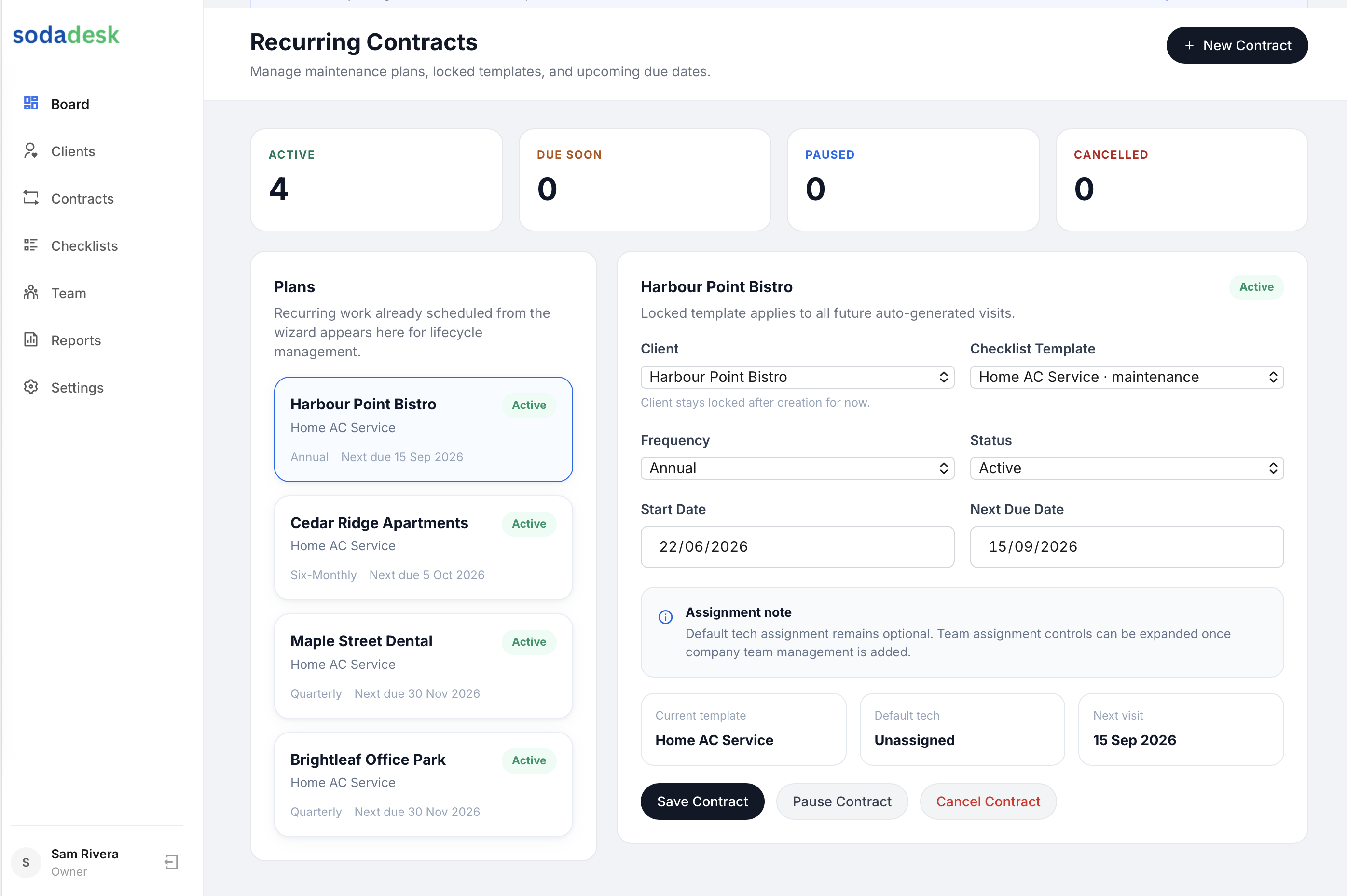
The problem with a contract that lives in somebody's head
A lot of electrical maintenance agreements start out fine. You set the yearly visit, maybe twice a year for a bigger site, and everybody nods. Then a month later the shop gets busy, a tech takes a shortcut on the panel room, and the only record is a half-legible note on a paper work order. That works right up until the customer asks what got done, or your own guy cannot remember if he tightened the lugs on the 225 amp disconnect at Building C.
That is where recurring service visits get sloppy. Not because the work is hard. Because the record is weak.
If you run electrical maintenance contracts, you already know the jobs are usually the same shape. Common areas. Lighting controls. Panels. Transfer switches. Emergency lights. Exit signs. GFCIs. Sometimes a generator room with an ATS that everybody avoids until it becomes a problem. The work itself is not mysterious. The hard part is proving the visit happened, proving who did it, and proving what they actually touched.
That is the whole game. Not fancy paperwork. Just a solid trail.
What should be recorded on every recurring visit
If a tech is on a scheduled service visit for an electrical customer, I want the record to look like the work itself. Plain and useful. Not a novel.
At minimum, the visit should show:
- who checked in
- when they got on site
- where they were, through GPS check in
- which recurring service plan or visit they were there for
- what panel, breaker, fixture, or device they inspected
- what they measured or tested
- what they replaced, if anything
- after photos of the finished work
- a checklist with the items completed
- customer signature if the site wants one
That sounds simple because it is. But simple records save you from ugly conversations later.
Say your tech is at a small office park doing a quarterly electrical maintenance contract. The checklist might include panel door secure, no signs of heat at lugs, labels present, breakers seated, emergency lights test good, and exterior lights operating. If he finds a burnt neutral on a lighting circuit, that gets noted too. If he swaps a contactor in a rooftop disconnect or replaces a corroded GFCI in a break room, the before and after photos matter. So does the time on site.
That record tells the customer the work happened. It also tells you whether the tech spent 18 minutes or 2 hours trying to sort out a problem.
Recurring visits fail when the same plan looks different every time
The biggest headache with recurring electrical service plans is inconsistency. One tech checks the same five things. Another tech checks ten things and forgets to write two of them down. A third guy does the work but leaves no photo of the panel after the cover goes back on. Now the customer asks what was done last month, and you have three different versions of the same visit.
That is bad for the customer relationship. It is worse for your shop.
Recurring electrical inspection software only matters if it keeps the visit repeatable. Every month, every quarter, every six months, the tech should see the same core checklist for that site. Maybe the site has a warehouse with high-bay lighting, a strip center with a main service and several tenant panels, or a school building with emergency lighting and a generator transfer setup. The checklist should match the property, but it should not drift from visit to visit.
That means your maintenance contract records need structure. Same site. Same recurring visit. Same proof items. Same expectation.
Not every call needs the same list, of course. A small retail tenant is not a data center. But each recurring plan should be built so the tech knows what he is walking into before he opens the panel door.
A good visit record saves you when the callback starts
This is where owners usually get burned.
A customer says a hallway light has been flickering for weeks. Or an exterior circuit is dead after the last service visit. Or a breaker keeps tripping and they swear nobody looked at it. If your tech did the work and the record is solid, you can go back and see the job folder. You can see the check in time, the photos of the panel, the notes about heat discoloration on the breaker, and the checklist showing the fixture test was done.
That does two things. First, it tells you whether the original visit was incomplete. Second, it tells you whether the new issue is actually new.
A real example. A tech services a small medical office on a recurring plan. He checks the panel, finds a loose dead front screw, tightens it, tests a GFCI, and leaves a photo of the reassembled panel. Two weeks later the customer says the receptacle by the nurses' station is dead. With a good record, you can see the receptacle was not on the original service scope. You can also see who was on site and how long the visit took. That keeps the conversation factual instead of emotional.
Without that record, you're guessing. And guessing costs money.
Time on site matters more than people think
Owners sometimes look at recurring service visits and focus only on the checklist. That is not enough. Time on site matters because it tells you whether the work matched the visit you sold and the visit your tech actually performed.
If a tech checked in at 9:12 and checked out at 9:26 on a quarterly electrical maintenance contract at a 30,000 square foot building, that is a story. Maybe everything was in good shape and the visit truly was quick. Or maybe the tech skipped the rooftop disconnects, did not test the emergency lighting, and just wanted to get to lunch.
You do not need to accuse anybody. You just need the record.
SodaDesk stamps the check in time and logs the GPS check in. That gives you a clean picture of who was there and when. If the tech took photos of the work done, the record starts to make sense. If there are checklist items completed and a customer signature at the end, even better. Now you have a real account of the visit, not just a name on a calendar.
That matters on recurring service plans because the work is easy to under-document. It is the same panel room, the same breaker racks, the same hallway fixtures. People assume the job is routine, so they stop recording it carefully. That is exactly when you get sloppy.
Build the recurring plan around the site, not around guesswork
If you're managing recurring electrical service contracts, the cleanest setup is to build each plan around the actual site assets. Not a generic template copied from one customer to another.
A warehouse might need service notes for:
- main service panel
- lighting contactors
- exit signs
- exterior wall packs
- overhead door operators
- battery backup units
A small office building might need:
- tenant panels
- common area lighting
- emergency egress lights
- restroom GFCIs
- the transfer switch room
A restaurant may add grease hood interlocks, kitchen receptacles, and cooler circuits.
The point is not the exact list. The point is that recurring job scheduling for trades only works if the recurring visit has a real checklist behind it. If the shop owner has to explain the same site to the tech every single time, the system is weak. If the tech can open the visit, see the plan, check in, complete the list, and attach the photos, the site starts to run on record instead of memory.
That is how you manage recurring service plans without turning your office into a paper chase.
Use the record to train better techs
Good service records are not just for customer disputes. They are also a quiet training tool.
When a newer electrician is doing recurring maintenance, you want him to learn what matters. Not just how to walk a site. What to look for in a panel. How a loose lug looks. What heat discoloration looks like around a breaker. Why a missing knockout matters. Why a dirty emergency light lens is worth noting. Why a photo of a finished panel after reinstallation matters more than a verbal promise that it is fine.
A good recurring visit record shows the next guy how the first guy handled the job.
That is useful on bigger routes too. If you have 5 trucks or 20 trucks, consistency across techs is what keeps maintenance contracts from turning into a mess. One tech should not look like he was on a different planet than the others. Same work. Same proof. Same standard.
What I would want in the truck and in the record
If I were running the shop, I would want the recurring visit record to include the boring stuff too. The stuff customers forget to mention when they call back.
I would want:
- panel number or location
- breaker size or circuit reference if relevant
- photo of the panel before work
- photo after the cover is back on
- notes on anything hot, loose, corroded, or broken
- testing results for emergency lights or GFCIs when they were part of the visit
- a note if access was blocked or the site was closed
- customer signoff if the contract calls for it
That kind of record keeps you honest. It also keeps the customer honest. If the back door was locked and nobody met the tech, that gets noted. If the site manager asked for a quick check of one dead circuit outside the contract scope, that gets recorded too.
And when you have to explain the month’s work to the owner, manager, or facilities lead, you are not guessing from memory. You are opening the visit and reading what happened.
Recurring service visits should leave a trail you trust
Electrical maintenance contracts are supposed to reduce surprises. But they only do that if every visit leaves proof behind. Time on site. GPS check in. Checklist completion. Photos. Signature when needed. That is the difference between a service plan you can run and one you just hope is working.
If a tenant says nobody checked the common area lighting, or a property manager asks what happened to the failed GFCI by the break room sink, you should be able to pull up the visit and answer it cleanly. No drama. No squinting at a greasy paper slip. Just the record.
That is the part that keeps recurring electrical work from turning into memory work.
Common questions
What should be on an electrical maintenance contract visit record?
At a minimum, I want the check in time, GPS check in, who was on site, the checklist, photos of the work, any readings or test results, and a customer signature if your site uses one.
Why do recurring electrical service plans need photos?
Because a checklist alone does not show what the panel, fixture, or disconnect looked like when the tech left. Photos of the finished work make the visit easy to verify later.
How do recurring service records help with callbacks?
They show who was there, when they were there, and what they actually did. If a customer says a problem was missed, you can check the last visit instead of guessing.
What kind of electrical jobs work best for recurring visits?
Common area lighting, panels, emergency lights, exit signs, GFCIs, lighting controls, transfer switches, and generator room checks are all good fits for a recurring plan.
How does SodaDesk fit recurring electrical maintenance work?
It records time on site, GPS check in, checklist completion, photos, and signature on each recurring visit, so each job leaves a clear record behind.