The callback that makes everybody talk in circles
Every electrical shop has seen this. A customer says a breaker keeps tripping. Your tech goes out, opens the panel, checks the load, maybe finds a loose set screw or a bad breaker, and writes a few notes on a pad or in a text thread. Then the same homeowner calls again and says, “Nothing was really done.”
That’s when the lack of evidence starts costing you. Not a big legal speech. Just plain business pain. Your guy was there. He did the work. But you can’t prove the breaker size, the amp draw, the panel condition, or even how long he was on site.
For electrical work, the proof matters because panels tell a story. A 200 amp service with a messy subpanel, a 40 amp double pole feeding a water heater, a GFCI that keeps opening in a damp basement. If the record is thin, the customer fills in the blanks with whatever suits them that day.
What a solid job record looks like
If you’re running 5 to 20 trucks, you don’t need a novel. You need the right facts in one place.
For a panel callback, that usually means:
- who checked in and when
- the exact panel location
- the issue found, in plain language
- the breaker number or circuit label
- readings taken on site
- what was tightened, replaced, reset, or left as found
- before and after photos
- a checklist showing the panel cover was reinstalled, labels were verified, and the area was left safe
- customer signature when the job is complete
That’s the kind of record that stands on its own later. Not a vague note that says “checked panel, all good.”
Say your tech finds a loose neutral on a multiwire branch circuit feeding a kitchen. He records the panel name, the breaker positions, the voltage reading line to neutral, and a photo of the repair before the deadfront goes back on. He notes the date, the time on site, and the finish time. That’s a real field record. Not office fluff.
Record the parts and readings that actually matter
Electrical evidence gets strong when it includes the numbers your tech actually saw. Don’t make him type a paragraph when a few clean fields will do it.
For a service call or maintenance visit, I’d want the following captured when it fits the job:
- panel and circuit ID
- breaker size and type if it was replaced
- voltage readings
- amp draw on the problem circuit
- continuity or resistance reading if it was part of troubleshooting
- torque check note if terminals were retightened
- GFCI or AFCI test result
- insulation damage, overheated conductor, or corrosion photo
- label condition if the panel schedule was corrected
You don’t need every item on every call. But when a tech says a 30 amp breaker is nuisance tripping because the load is pulling 28.9 amps and the motor is cycling hard, that number matters. If he swaps a breaker, note the old part and the new part. If he finds heat damage on a lug, get the photo before anything gets cleaned up.
This is where a good electrical inspection evidence app earns its keep. The tech captures the reading at the moment of work. Not later. Not from memory in the truck. Right there, while the cover is off and the meter is still in his hand.
Time on site is part of the proof
People forget this part. But time matters.
If a tech says he was on site for 18 minutes and the panel work took 5 of them, that tells you something. If the job took 2 hours because he had to trace a miswired circuit through an attic and a crawlspace, that tells you something else. Time on site backs up the rest of the record.
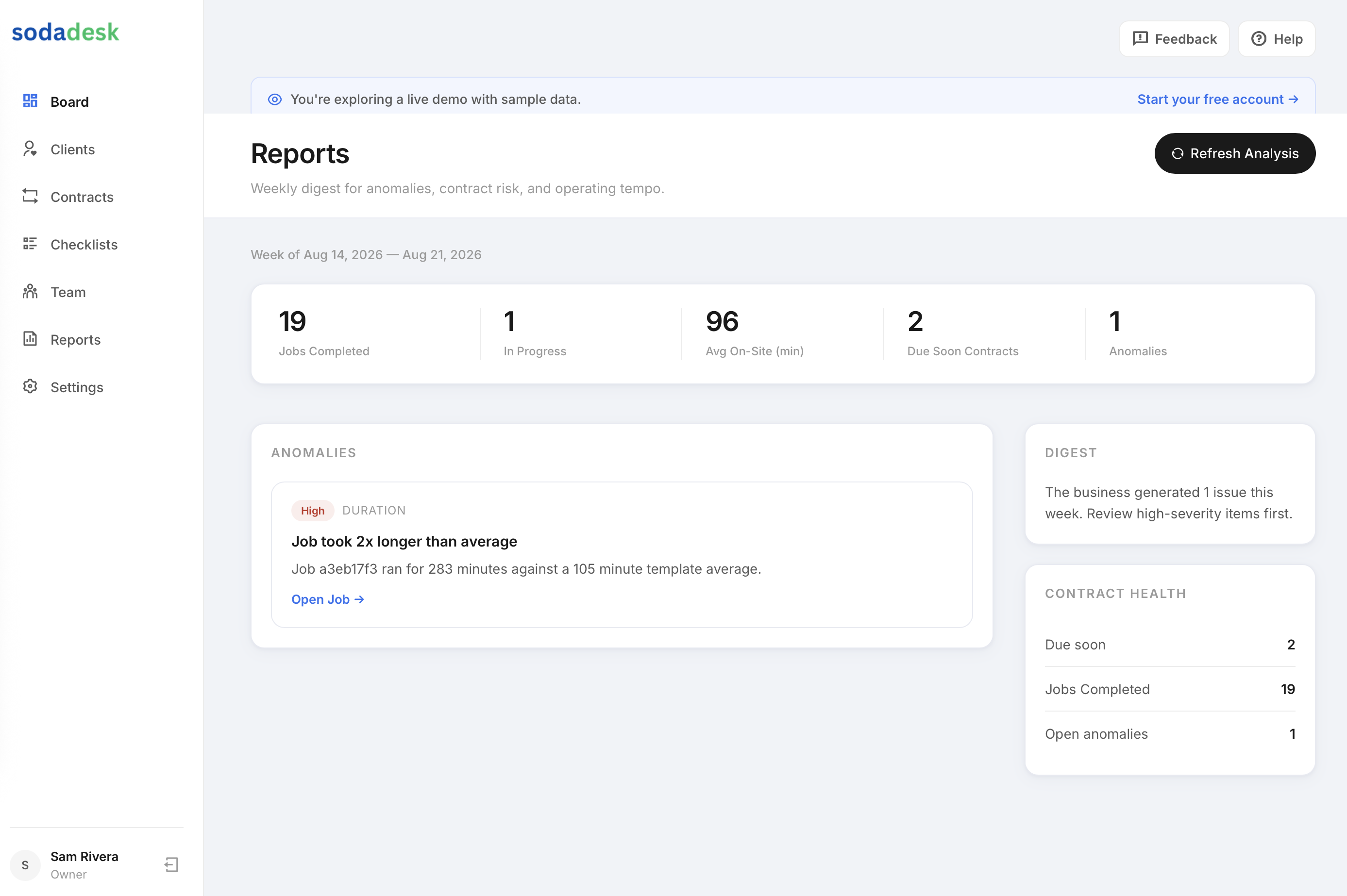
SodaDesk stamps the check in time with GPS. It stamps the check out too. That gives you a clean trail for the visit. You’re not guessing whether the tech was there long enough to actually pull the panel apart, test the circuit, and document it. You know.
And if you run recurring service visits for apartment buildings, churches, or small commercial properties, that time record matters even more. The same panel gets looked at every quarter. The building manager wants to know the visit happened. Your team wants less back and forth. The service record shows the visit, the time on site, and the notes from that day.
Photos beat arguments
Electrical work is visual. Burn marks, overheated insulation, a missing knockout plug, a brittle breaker that crumbles in the hand. You can describe those things, but a photo closes the gap.
The best photos are not artsy. They’re boring and clear.
Take a wide shot of the panel before work. Get a close shot of the bad breaker, the loose conductor, or the damaged lug. Then take the after photo with the cover back on and the work area clean.
If the panel is in a cramped basement and the lighting is terrible, that’s fine. Use the phone flash. Just make sure the picture shows what changed. If your tech replaced a two pole breaker feeding an HVAC air handler, the after photo should show the breaker seated properly, the cover back on, and the label updated if needed.
That’s the part customers remember. They don’t remember your apprentice’s name or the exact meter reading. They remember whether the job looked finished.
Use a checklist so the same steps don’t get skipped
A good field checklist keeps the little misses from turning into callbacks.
For electrical service work, I’d include items like:
- panel cover reinstalled and secured
- breaker positions verified
- deadfront screws accounted for
- conductors checked for damage
- terminals inspected
- labels updated if the circuit changed
- test buttons used on GFCI devices where applicable
- work area cleaned up
- customer informed of findings
That checklist does two things. First, it reminds the tech to finish the job the same way every time. Second, it gives you a record that the work was actually completed. Not assumed. Completed.
If the job is a recurring maintenance visit, the checklist can stay mostly the same and just get reused with the date and site. That keeps the record consistent across all the trips without turning it into busywork.
Why this matters when the customer pushes back
A lot of owner headaches start with a simple sentence. “He said he fixed it.”
Maybe the customer is honest. Maybe they’re frustrated. Maybe the breaker tripped again because the toaster and the microwave are on the same circuit and nobody wanted to hear that. Doesn’t matter. If your record is solid, the conversation changes.
You can say the tech checked in at 2:14 PM, stayed 47 minutes, documented the panel, tested the suspect circuit, noted the amp draw, replaced the failed breaker, and left three photos. You’ve got a cleaner conversation than “I think we were there.”
That kind of record also protects your own people. A tech does careful work, but he’s moving fast, carrying tools, and trying to keep a panel open while the customer asks questions. If he documents the work right then, you don’t have to rely on his memory after a long day.
Keep the record tied to the job, not the office
This is where a lot of shops get sloppy. The office ends up with one note, the tech has another, and the photo sits somewhere in a text thread with a blurry dog picture.
A field record should live with the visit itself. Check in. Do the work. Capture the photos, checklist, and readings. Check out. Then the next person who opens that job sees the whole story.
That’s what SodaDesk handles well for an electrical shop. It keeps the proof attached to the visit. Who was there. What time they arrived. What they found. What they recorded before the panel got closed up.
And when that same address shows up again, you’re not starting from scratch. You’re looking at the last visit, the last readings, the last photos, and the name of the tech who touched it.
Common questions
What should a tech record after an electrical callback?
Record who was on site, the panel location, the circuit or breaker involved, the readings taken, any parts replaced, photos before and after, and a checklist showing the panel was left safe and closed up.
Why do photos matter on electrical service calls?
Photos show the condition of the panel, the damaged part, and the finished work. They cut down on arguments later because you can show what the tech actually saw and changed.
Do I need time tracking for electrical job proof?
Yes. Time on site backs up the rest of the record. It shows when the tech arrived, how long he stayed, and whether the visit was long enough to do the work he documented.
What readings should be captured on panel work?
Use the readings that fit the job. Voltage, amp draw, breaker size, GFCI or AFCI test results, and any note about loose or overheated connections are the most common ones.
How does recurring service documentation work for electrical shops?
You keep the same visit record structure each time. Check in, photos, checklist, readings, notes, and check out. That gives you a history of the site instead of a pile of separate scraps.