Why the paperwork falls apart after the truck leaves
Backflow work is one of those jobs where everybody wants a clean story later. The property manager wants proof. The customer wants dates, readings, and a name. Your tech just wants to get to the next call. And if you wait until the end of the week to sort it out, details start disappearing.
I have seen this play out on plenty of service work. The tech pulls a Wilkins assembly apart, replaces a worn check seat, flushes the line, and gets the unit back together. The job gets done. But if nobody records the model number, the pressure readings, the condition of the relief valve, and a photo of the installed unit, you are left with a handshake and a memory. That is thin ice.
This is where job evidence matters. Not some fancy report. Just a real record that says who was there, when they showed up, what they found, what they touched, and what the finished work looked like.
The record you actually need on a plumbing service call
For plumbing inspection evidence app work, the useful stuff is pretty plain. You do not need a novel. You need enough detail that you can point to it later without guessing.
A good backflow visit record should include:
- GPS check in when the tech arrives
- Time on site from arrival to departure
- Customer or site contact name
- Backflow assembly type and model
- Inlet and outlet pressure readings
- Relief valve condition
- Parts replaced, like o-rings, checks, springs, or a full cartridge
- Before photo of the assembly
- After photo of the finished work
- Tech checklist showing the steps were completed
- Signature from the site contact if the customer wants one
That is the kind of record a shop owner can stand behind. If the same property calls again, you can open the job and see what happened last time. You do not have to ask a tech to remember which stairwell basement the assembly was in or whether the brass body had a crack by the test cocks.
What goes wrong when the evidence is sloppy
The ugly part is that bad documentation does not always show itself right away. It shows up when somebody questions the bill, disputes the visit, or says the repair never happened.
Say your tech services a reduced pressure zone assembly at a medical office. He changes a tired spring, documents the readings on a scrap of paper, snaps no photos, and checks out with no site signature. Two weeks later, the office manager says the backflow was never touched because they still see the same old corrosion on the body. Now what do you have. A tech memory and maybe a coffee-stained note in a truck console.
That is why proof at the moment of work matters. The picture of the valve before service. The after photo with the bonnet back on and the area cleaned up. The checklist showing the test cocks were opened and closed, the relief valve was checked, and the line was restored. The clocked time on site showing the visit lasted long enough to do the work.
You are not building a legal file. You are building a business record. And that record should make sense to a customer who was not standing in the mechanical room with your tech.
What a tech should capture while standing at the assembly
This is the part that lives or dies on habit. If the tech waits until he is back in the van, the job note turns into a memory exercise. That is where mistakes creep in.
Have the tech capture the record right there, while hands are still on the job.
On a backflow service, I would want the tech to record:
- The exact location, like the basement mechanical room, mop sink closet, or irrigation vault
- The assembly make, model, and size
- Static pressure and any test readings taken during the visit
- Any visible damage, rust, leaks, or missing caps
- Parts used
- A clean after photo that shows the assembly reassembled and accessible
- The checklist item that says the water was restored and the area was left in safe shape
If the customer asks later why the tech spent 45 minutes on site, you can point to the readings, photos, and checklist. That is a whole lot stronger than, “Yeah, I think we were there around lunch.”
How recurring service visits stay organized
Backflow work is often recurring. Same building. Same valve. Same general headache every year or every quarter. If you manage those visits with a real job record, the next call starts with the right history.
A recurring service visit record should show the last tech who touched the assembly, the prior readings, and what got replaced. If the check valve started sticking last fall, the next tech should see that before he gets there. If a customer has three buildings with three different assemblies, you want each one tied to its own evidence trail.
That saves time on the floor. It also keeps the story straight when someone in the office says, “We already paid for that service.” You can open the visit history and see the date, the photo, the checklist, and the tech who checked in on site. No arguing from memory.
And if the same site keeps having the same issue, you have something better than a hunch. You have the record to show a pattern. Maybe the relief valve keeps dumping because the upstream pressure swings. Maybe the assembly is aging out faster than anyone thought. That kind of trend is hard to see if every visit lives in a different notebook or a text thread.
A simple example from a real plumbing shop day
Picture a Saturday morning at a small apartment complex. The backflow on the irrigation line is in a cramped fenced area behind a dumpster pad. The tech checks in with GPS, starts the timer, and takes a photo before touching anything. He sees green corrosion on one test cock and a slow drip at the relief valve.
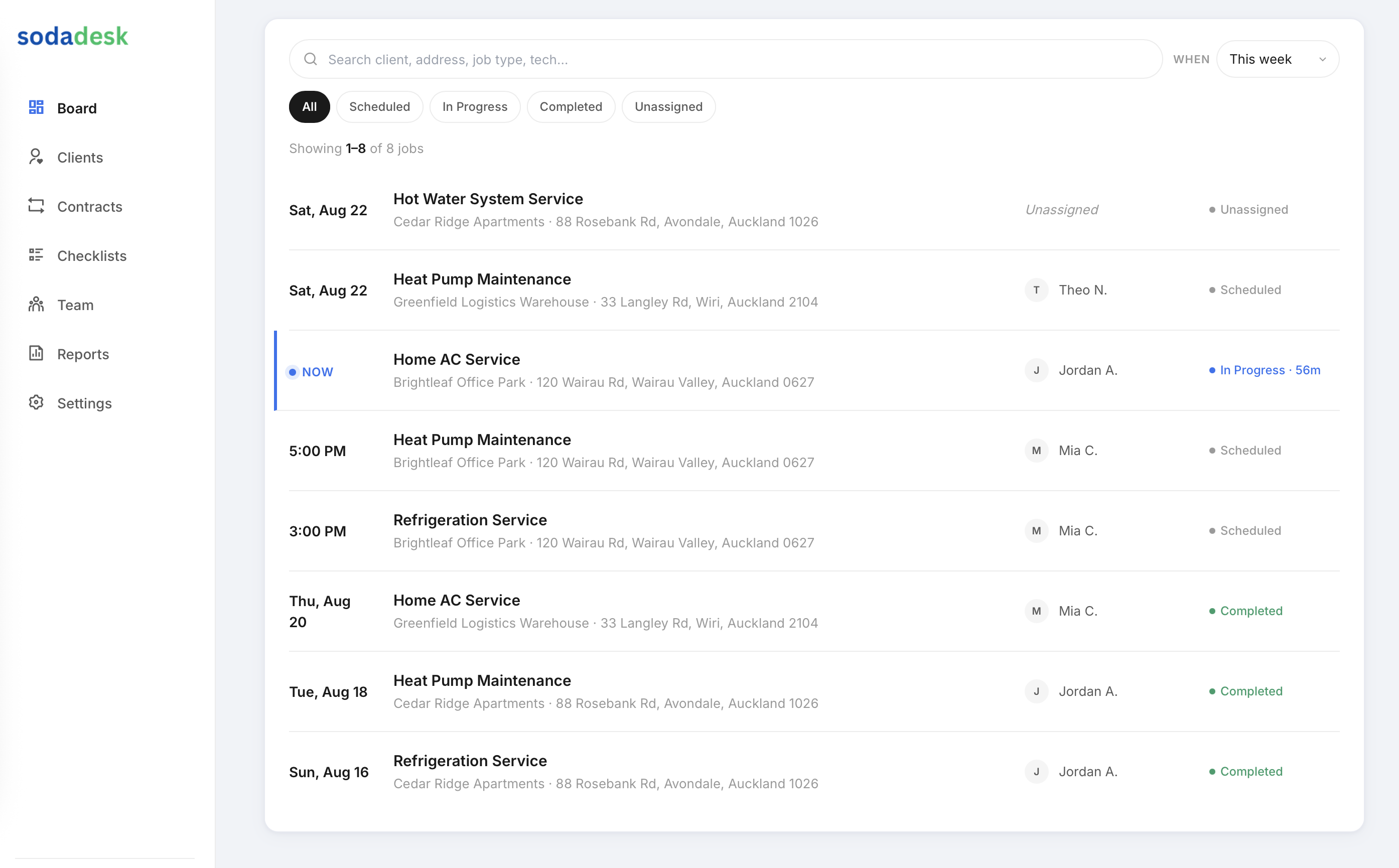
He records the assembly model, notes the drip, and runs the service. He replaces the worn parts, flushes the line, and snaps an after photo once the valve is cleaned up and the area is back together. He checks off the repair steps, records the time on site, and gets the site manager to sign on the tablet.
That is the whole story. Not a giant report. Just enough proof that the job got done by the right person, at the right place, on the right day.
If that same complex calls six months later, you know what was there before. You know what parts went in. You know the time on site. And when the manager asks, “Did your guy actually service it last time,” you are not hunting through texts.
What to keep in the job record and what to skip
Owners get in trouble when they ask techs to write a paragraph every time. Most guys will not do it, and the ones who do will do it badly. Keep the record tight.
Keep:
- Check in time
- Check out time
- Site photos
- A short checklist
- Parts used
- Readings taken
- Customer signature if needed
Skip the fluff. Skip the long story about traffic, lunch, or the fact that the lock on the gate was annoying. Nobody needs that to understand the service record.
The point is simple. When a plumbing job needs proof, give yourself enough evidence to answer the next question without calling the tech back out to the truck. That is what good job documentation is for. It keeps the shop from living on hope and memory.
Common questions
What should I record on a backflow service visit?
Record the check in time, time on site, assembly make and model, pressure readings, parts replaced, before and after photos, a short checklist, and a site signature if you use one.
Why do photos matter on plumbing service work?
Photos show what the assembly looked like before the work and what it looked like when the tech left. That settles a lot of disputes fast, especially when someone questions whether the visit happened.
Do I need a long service note for each job?
No. A tight checklist with readings, photos, parts, and time on site is usually better than a long handwritten story that nobody wants to read later.
How does recurring visit history help my shop?
It shows what was done last time, who did it, and what changed. That makes the next visit faster and keeps the record straight across repeat service calls.
What is the biggest mistake owners make with job evidence?
They let techs finish the work and fill out the record later. By then the details are fuzzy, and the proof gets weak.