The problem with a "done" backflow job
Backflow work is one of those jobs where the details matter more than the sales pitch. You might have a double check, a RPZ, a bypass arrangement, or a unit tucked behind a mechanical room wall where nobody sees it until something goes wrong. If the customer calls later and says the unit was leaking, the lid wasn't secured, or the water was off longer than they expected, a tech's word is thin evidence.
And honestly, paper notes get fuzzy fast. "Checked valve, all good" doesn't tell you much. It doesn't tell you who was there, when they checked in, what the pressure readings were, what parts got replaced, or what the unit looked like before the cover went back on. That's where job evidence matters. Not for show. For your own record when the story changes.
A solid backflow service record should answer a few simple questions. Who was on site. When did they arrive. What device was there. What was the condition before the work started. What readings did they record. What changed by the time they left.
What your tech should capture before touching the valve
The first photos should happen before anyone loosens a fitting or opens a test cock. You want the scene as found.
Have the tech take a wide shot of the whole setup. That means the valve, the surrounding wall or pad, the meter if it is nearby, the shutoff, and anything that shows location. If the unit sits in a pit, photo the access lid and the inside condition. If it lives in a mechanical room, photo the nearby labels, piping, and any visible leaks or corrosion.
Then have them take a close-up of the device itself. Tag plates matter. So do serial numbers, model numbers, and any visible damage. If the test kit is going to be used on a backflow assembly, you want a shot that shows the exact unit before work starts. That removes the "wrong valve" argument later.
A checklist should cover the basics before service begins.
- Device type
- Serial number or asset tag
- Location on site
- Visible leaks or corrosion
- Access condition
- Water shutoff point noted
- Customer contact on site
If the tech finds something weird, like a broken test port cap or a missing lock on the enclosure, that needs a photo too. Don't trust a quick note in the margin. Take the picture while you're standing there.
The readings that actually matter
Backflow work lives and dies on the numbers. A customer doesn't need a lecture about test procedure. They need a clear record of what was measured and what was done with those measurements.
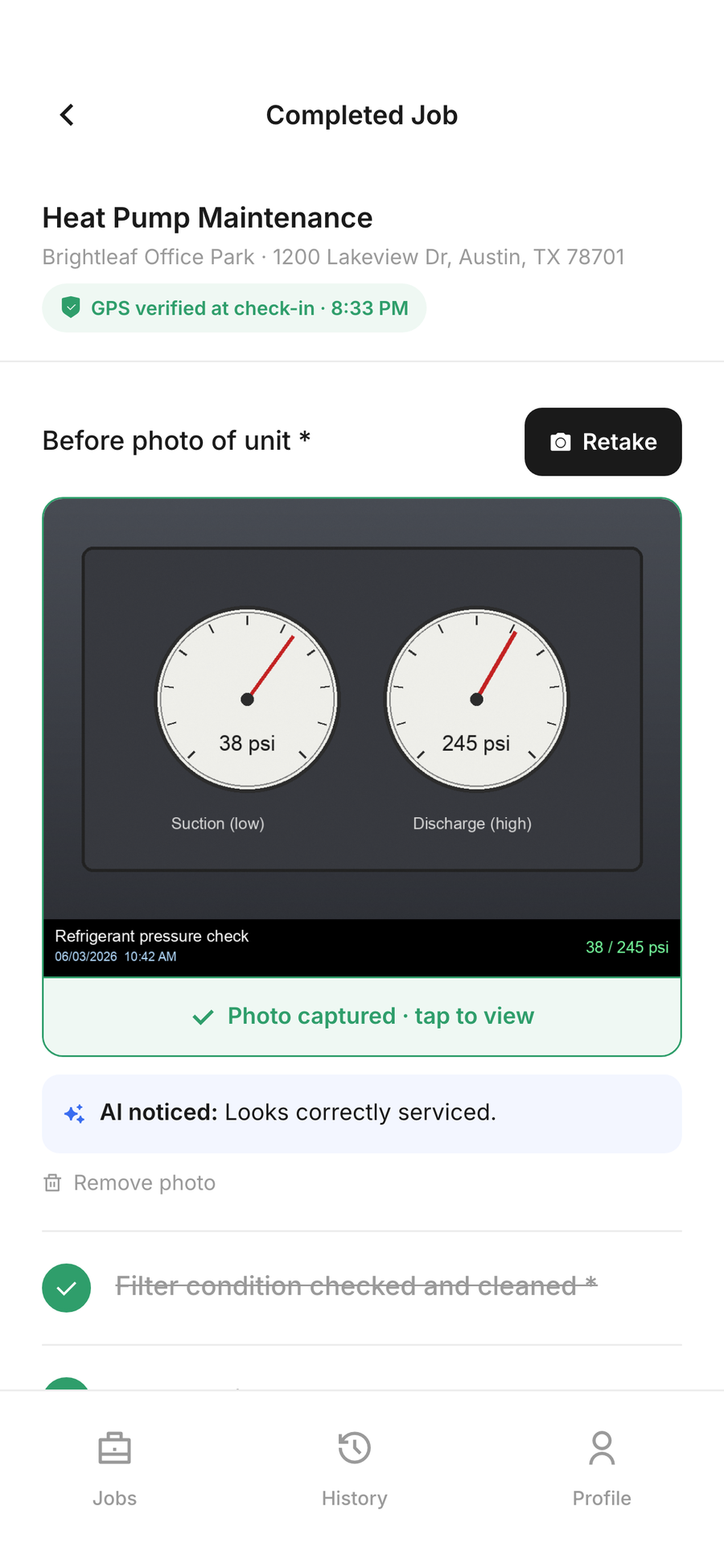
Your checklist or form should capture the readings the tech actually sees on the gauge, not a summary after the fact. If the assembly has test cocks, note each reading. If the relief valve opened at a certain point, record that. If the valve failed a step and needed repair, the record should show it. If a part was changed, write down the part and the condition that led to it.
Good records might include:
- inlet pressure
- outlet pressure
- differential pressure across the assembly
- relief valve opening point
- leak location
- replacement parts installed
- final retest result
You don't need a fancy story. You need the numbers written down while the tech is still looking at the gauge. That matters more than a cleaned-up note typed later from memory in the truck.
And if the job includes a recurring service visit, like an annual backflow inspection on a mixed-use building, tie the record to that asset. Same valve. Same location. Same customer. That way the next visit isn't a fresh start from zero. You can look back and see if the valve has been failing in the same place every year or if the wear pattern changed.
Why time on site matters more than people think
Some owners treat time tracking like admin junk. I get it. Nobody bought a pump truck so they could chase timestamps. But on a backflow job, time on site is part of the proof. It tells you whether the tech actually spent the time needed to find the problem, pull the strainer, clean the assembly, swap the kit, and retest.
If a tech checks in at 8:10 and checks out at 8:24 on a repair that should have taken an hour, that raises a question. Maybe it was a simple valve cap replacement. Maybe it was a rushed job. Time alone doesn't prove quality, but it gives the record shape.
SodaDesk stamps the check in time and check out time. It ties those times to the tech who was there and the GPS check in point. That matters when the backflow assembly is in a basement, on a remote pad, or behind a locked gate. It shows the job happened where the record says it happened.
A shop owner can look at that and say, fine, we know who handled it and how long they were there. That's useful when a customer pushes back or when you need to review a callback without guessing.
Photos after the work are where the story gets finished
The after photos are the ones that save you from headaches later. Don't settle for one blurry shot from six feet away. Get the close-up and the wide shot again.
Take a photo of the repaired assembly with the cover back on or the cabinet closed. If the tech replaced a relief valve, show the new part in place. If they tightened a fitting, show the area dry. If they cleaned the dirt and sediment out of the pit, show the pit clean enough that a person can see the assembly again.
The after photo should answer these questions.
- Did the tech leave the area neat?
- Is the valve restored to service?
- Are the test ports capped?
- Is there any visible leak left behind?
- Did the cover or enclosure go back the way it should?
This is also where a customer signature belongs if you're collecting one on site. Not because a signature solves every dispute. It doesn't. But it does show the customer or site contact saw the work while the tech was there. That beats trying to recreate the whole day from a voicemail thread later.
The mistakes that make a good record useless
The worst evidence is the kind that looks complete but leaves out the one thing you need.
A tech takes only one photo of the finished valve and never shows the serial number. Now you can't prove which assembly was serviced. A tech records a note but forgets to mark the failed relief valve and the replacement part. Now the repair looks like a mystery. A tech writes the job up later from memory and gets the time wrong. Now your record is soft.
Another one is skipping the before photo because the valve was "obvious." Obvious to who? The person on site today isn't always the one asking questions next month. Take the photo anyway.
And keep the checklist short enough that people actually use it. If you make the form a monster, the tech will rush through it. Ask for the parts that matter: device type, location, readings, condition, repairs, final test result, photos, time on site, signature. That covers the job without turning the work into paperwork hell.
How a plumbing shop should use the record after the truck leaves
This kind of documentation isn't just for peace of mind in the moment. It becomes the file you reach for when the customer calls later. Maybe they say the valve was never serviced. Maybe they say the water pressure changed after the visit. Maybe they ask why a part had to be replaced. If you have the record, you answer from facts.
A clean backflow record gives your office a simple way to verify what happened. Who checked in. Which asset was serviced. What the tech saw before the work. What readings came off the gauge. What changed after the repair. That is plain business evidence between you and your customer. No drama. Just the story of the visit.
And for recurring service visits, that history gets even more useful. You start seeing patterns. Same valve. Same leak point. Same pit filling with water every spring. That is the kind of thing a shop owner can use to decide whether a recurring service site needs attention before it turns into a bigger mess.
If you run plumbing crews, this is the part worth getting right. Not because paperwork is fun. It's not. Because the next time a customer says, "your guy was here, but I don't know what he did," you'll have more than a shrug and a memory.
Common questions
What photos should a tech take on a backflow service call?
Get a wide shot of the setup before work starts, a close-up of the device tag or serial number, photos of any leaks or damage, and after photos with the assembly restored, caps on, and the area left in order.
What readings belong in backflow job documentation?
Record the actual gauge readings the tech saw, like inlet and outlet pressure, differential pressure, relief valve opening point, failed test steps, and the final retest result after any repair.
Why track time on site for a plumbing evidence record?
Time on site shows who was there and how long the job took. That gives the record shape when a customer questions whether the work was done or says the visit was rushed.
How does recurring service history help on backflow jobs?
It ties each visit to the same device and location, so you can see repeat leaks, repeated test failures, or the same part wearing out over time.