The problem starts when the cover goes back on
If you run electrical service work, you know the routine. A tech swaps a breaker, tightens a lug, replaces a GFCI, maybe corrects a loose neutral, then closes the panel and heads out. Two days later the customer says the lights still flicker, or the outdoor receptacle is dead again, and now you’re trying to remember what was on that panel in the first place.
That’s where photo proof and a simple checklist earn their keep. Not because it sounds fancy. Because a clear record cuts through the usual nonsense. You know who was there, when they showed up, what they touched, and what the panel looked like before and after the work.
And if you’ve ever paid for a return trip because the first tech left you with nothing but a scratched-up timesheet, you already know why this matters.
What to capture on an electrical service call
A good service record doesn’t need a novel. It needs the right details. Think like the shop owner who has to answer for the work later, not like the guy trying to get to lunch.
For a typical electrical call, I want a tech to capture:
- a photo of the panel before the cover comes off
- a photo of the panel after the work is complete
- close-up photos of any replaced parts, like a breaker, contactor, receptacle, switch, or transformer
- a checklist showing what was checked, not just what was replaced
- time on site
- GPS check in
- the customer signature if the job calls for it
That’s the basics. If the service call involved troubleshooting, I want the tech to note the symptom and the fix in plain language. "Living room circuit tripped under load. Found damaged 20 amp breaker. Replaced and tested with vacuum and lamp." That beats "fixed issue" every time.
If the job was a panel service, the before and after photos matter even more. You want to see the labeling, the breaker positions, the condition of the interior, and any signs of heat or corrosion. If a tech says the panel had a loose feeder lug, a photo of that lug before tightening tells the story. If he replaced a breaker because it was weak, snap the old one and the new one. Simple.
Why panel photos save you from dumb arguments
A panel is one of those places where memory gets fuzzy fast. A tech may swear the panel was a mess before he touched it. The customer may swear nothing was labeled. And you’re stuck in the middle trying to figure out what the truth looked like at 2:15 on Tuesday.
Panel photo proof fixes that.
Say your tech goes to a house with nuisance tripping on a kitchen circuit. He opens the panel, checks the breaker, finds heat discoloration around a loose termination, and replaces a worn breaker. If he records a photo of the panel interior before work, another after tightening and replacement, and a checklist entry that says he tested the circuit under load, you’ve got a clean record.
That record does two jobs. First, it shows the customer what was actually done. Second, it gives you something to pull up when someone says, "Nobody worked on that breaker," or "The panel was damaged when your guy left."
I’ve seen enough shop headaches to know this. Most disputes aren’t about huge mistakes. They’re about little details nobody wrote down. One missing photo. One sloppy note. One tech who says he fixed the problem but never says what the problem was.
The checklist should match the work, not the paper
This is where a lot of shops miss. They hand techs a generic checklist that asks the same things on every call, so the form ends up saying almost nothing.
For electrical work, the checklist needs to match the actual visit. If it’s a service call on a tripping breaker, the checklist should include items like:
- circuit tested under normal load
- breaker size confirmed
- connections checked for heat or looseness
- device or fixture tested at the end of the call
- cover reinstalled
- panel area left clean
If it’s a recurring maintenance visit, maybe the checklist includes:
- panel interior inspected for dust, corrosion, or heat marks
- breakers checked for labeling and condition
- grounding and bonding visually verified
- receptacles or disconnects tested where applicable
- photos added before and after cleanup
That’s useful because it forces the tech to do the work, not just claim he did it. Paper forms get copied and rushed. A mobile checklist with required fields makes a tech slow down long enough to think.
And that’s the point. You’re not trying to babysit him. You’re trying to keep the job clean.
Time on site matters more than people think
Electrical work gets rushed when nobody’s tracking the clock right. A tech says he spent an hour on a panel, but the truck was there for twenty minutes. Or he says the troubleshooting took half a day, but there’s no proof he was on site when he claimed.
That’s why time on site belongs in the job record with the photos and checklist. If the GPS check in shows the tech arrived at the house, the time log shows he stayed on site, and the photos show the panel work was actually completed, you’ve got a much better record than a scribbled note in the back of a van.
This matters on recurring service visits too. Think about a strip mall panel room, a small office building, or a bank of disconnects for rooftop equipment. The work is often routine, but the record still matters. If your tech was there for preventive maintenance, I want the visit tied to a date, a location, and a set of tasks. I want to know which panel was opened, what was checked, and what got photographed.
A clean record stops the "we never got a visit" conversation before it starts.
A real example from the field
Let’s say your tech gets called to a home with a dead garage outlet and intermittent tripping on a basement circuit. He checks the panel, finds a tired breaker on the garage circuit, and notices a loose neutral in the basement box. He tightens the connection, replaces the breaker, tests the outlet, and checks voltage at the receptacle. Maybe he also finds scorch marks on the old breaker.
What should he record?
He should take a before photo of the panel. He should photograph the old breaker and the new one. He should mark the checklist items for troubleshooting, breaker replacement, neutral inspection, and final testing. He should record the voltage reading at the receptacle, if that’s part of the fix. He should note the time on site and check in with GPS when he arrives.
Now imagine the customer calls later and says the garage still trips. You can open the job record and see exactly what was done, by whom, and when. If there’s a repeat issue, you’re not guessing from memory. You’re looking at the evidence.
That’s a lot better than trying to reconstruct the visit from a voicemail and a muddy work shirt.
What good field photo documentation looks like
Good field photo documentation isn’t a pile of random pictures. It’s organized proof.
For electrical work, the photos should answer plain questions:
- What did the panel look like before the tech opened it?
- What part was replaced?
- What did the finished work look like?
- Was the area left safe and tidy?
- Did the tech actually show up and stay long enough to finish the job?
You don’t need ten photos of the same breaker. You need the right ones. A before shot. A close-up. An after shot. Maybe one more if there’s a burned connector, damaged device, or label issue worth showing the customer.
That’s the kind of record that holds up in a real shop. Not because it’s legal theater. Because it keeps the conversation grounded in facts.
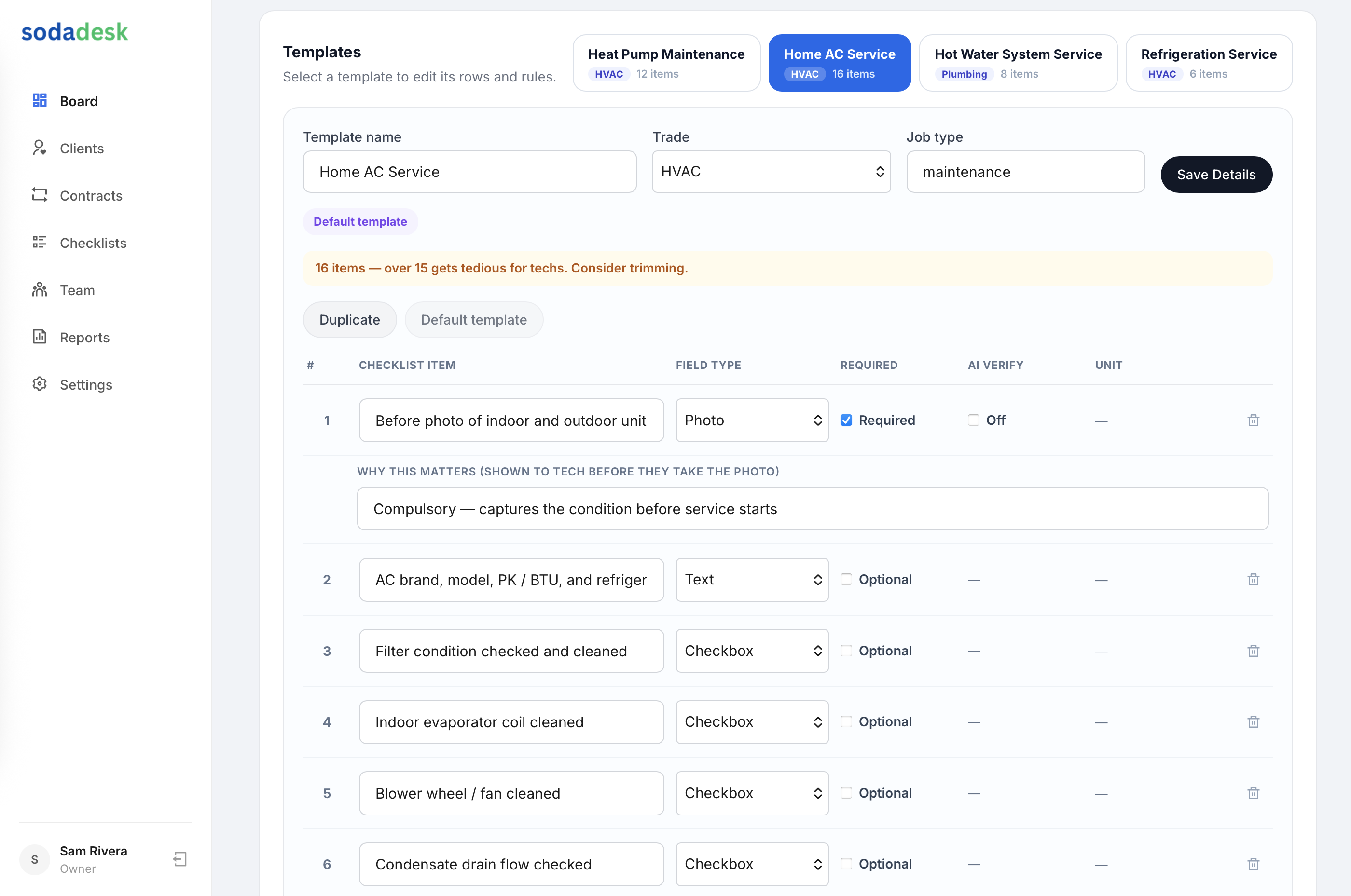
Making mobile checklists usable for your techs
If you want techs to actually use mobile checklists, keep them short enough to finish on the tailgate without cursing your name.
A good electrical checklist should feel like the job, not a tax form. Use plain labels. Put the required photos in the right spots. Make the tech confirm the panel was reassembled, the circuit was tested, and the customer got a walk-through if that’s part of your process.
The best forms I’ve seen are the ones a tech can complete while the tools are still out. They record the work while they’re standing right there at the panel or receptacle, not three hours later after the details have gone fuzzy.
That’s also where customer signatures fit. Not as a legal stunt. Just as a record that the customer saw the work, the photos, and the checklist, and accepted the visit as completed.
Why this matters in a five to twenty truck shop
Big shops can bury sloppy records under layers of office staff. Small shops can’t. If you run five to twenty trucks, every missed detail lands back on you. You’re the one eating the callback, answering the customer, or trying to figure out whether the same breaker failed twice or nobody documented the first repair well enough.
Photo proof and checklists keep your techs honest without making the job miserable. They show what happened at the panel, who did it, when they were there, and what got tested before they left. That’s the kind of record that saves a lot of back and forth later.
And honestly, once your crew gets used to it, the job gets cleaner too. They stop treating the truck like a rolling memory bank and start leaving behind something you can stand behind.
Common questions
What photos should a tech take on an electrical service call?
At minimum, I want a before photo of the panel or device, a close-up of the part that was replaced or repaired, and an after photo when the work is done. If there’s heat damage, loose wiring, or a bad breaker, capture that too.
What should go on an electrical checklist?
Use the checklist to match the actual job. For service work, that usually means troubleshooting steps, parts replaced, circuit testing, panel reassembly, cleanup, and any customer walk-through notes.
Why record time on site with photo proof?
Because the photos show what got done and the time log shows when it happened. Put those together with a GPS check in and you’ve got a much clearer job record than a handwritten note.
Do recurring electrical maintenance visits need photos too?
Yes. A photo of the panel before and after the visit, plus checklist items for what was inspected, gives you a record that the visit happened and the work was completed.
What if the customer questions the work later?
You can pull the job record and show the photos, checklist, time on site, and who checked in. That usually settles the argument faster than trying to remember it from the truck.