The problem with recurring plumbing work is not the work
A lot of recurring plumbing jobs are small. Water heater flushes. Sump pump checks. Backflow area walkthroughs. Drain line inspections. Fixture checks in a restaurant or office building. None of it sounds dramatic. But recurring work is where sloppy records create ugly little problems later.
Say you have a customer on a quarterly maintenance plan. Your tech goes out, drains a little sediment from a tank, checks the T and P relief valve, looks at the expansion tank, and signs off. Good day. But six months later the customer says the water heater never got serviced. Or they ask why the basement sump was dead after a storm. If all you’ve got is a scribbled note in a text thread, you’re stuck arguing from memory.
That’s the part owners hate. Not the wrench work. The mismatch between what happened and what you can prove happened.
A recurring visit should leave a paper trail without the paper
Recurring plumbing service is a record-keeping job as much as a wrench job. The record should show four things every time.
Who checked in.
When they got there.
How long they stayed.
What they did while they were there.
SodaDesk stamps the GPS check in, logs the time on site, and ties the visit to the technician. Then your tech adds photos and checklist items from the job. That means the customer file shows more than a line that says “annual maintenance completed.” It shows the work behind it.
For plumbing, that might mean a photo of a water heater after flush, a shot of the expansion tank showing the pressure reading, a picture of a clean drain pan, or a checkmark next to “tested shutoff valve.” If the visit includes a backflow area, the tech can photograph the valve assembly, the surrounding space, and any leaks or corrosion they found. If it’s a sump pump, they can capture the pit, the float switch, and the discharge line.
That’s a real record. Not a story.
What to record on a plumbing maintenance visit
You do not need a novel. You need the right few details every time. Keep it boring and consistent.
For a water heater visit, I’d want:
- arrival time and departure time
- GPS check in at the site
- photos before and after the flush
- sediment amount if it’s worth noting
- T and P relief valve condition
- expansion tank pressure if your tech checks it
- evidence of leaks, rust, or scale
- checklist note that the burner area or elements were inspected
For a commercial restroom or tenant space, the records might look different:
- fixture condition
- slow drain notes
- shutoff valve function
- visible leaks at supply lines
- cleanout condition
- any recurring trouble spot that needs follow-up next visit
For a sump or lift station visit, you’d record:
- pump operation check
- float switch action
- pit condition
- discharge line condition
- signs of debris or grease buildup
- photo of the unit before and after cleaning
The point is not to turn your tech into a stenographer. The point is to leave enough proof that nobody can say later the visit was imaginary.
The bad habit that gets shops in trouble
The worst habit I see is waiting until the end of the month to clean up recurring service records. By then the tech has forgotten whether the flush was on the 3rd or the 5th. The photos are mixed in with five other jobs. The office is guessing. That is how maintenance plans get messy.
And messy records cause real friction with customers. A property manager who pays for quarterly service expects to see what got done. If you cannot show it, they start wondering what else got skipped. Not because they’re difficult. Because they’re paying for a visit that lives or dies on trust.
A shop owner should treat each recurring visit like a small job file. Same day, same technician, same proof. If the tech checked in at 9:12 AM, was on site for 42 minutes, and photographed a water heater with new sediment flushed out, that file is worth keeping.
Why recurring service plans break down in plumbing
Plumbing maintenance is easy to underestimate. A water heater can look fine until it’s full of mineral buildup. A sump pump can work during a dry week and fail the first time the pit gets hammered. A backflow area can sit untouched until a small leak becomes a rusted mess.
The customer usually does not see those warning signs. Your tech does. That means the service record has to carry some weight. If the tech notes that the shutoff valve is stiff, the anode is shot, or the expansion tank is waterlogged, that note matters on the next visit. It shows the issue was there before it became a failure.
This is where recurring visit history earns its keep. You can look back and see patterns. Same sump pump room. Same slow drain. Same water heater with sediment every quarter. Same tenant suite with a supply line that keeps sweating. That kind of history tells you whether the plan is working or whether you’ve got a repeat problem the customer needs to hear about.
What the office needs, not just the tech
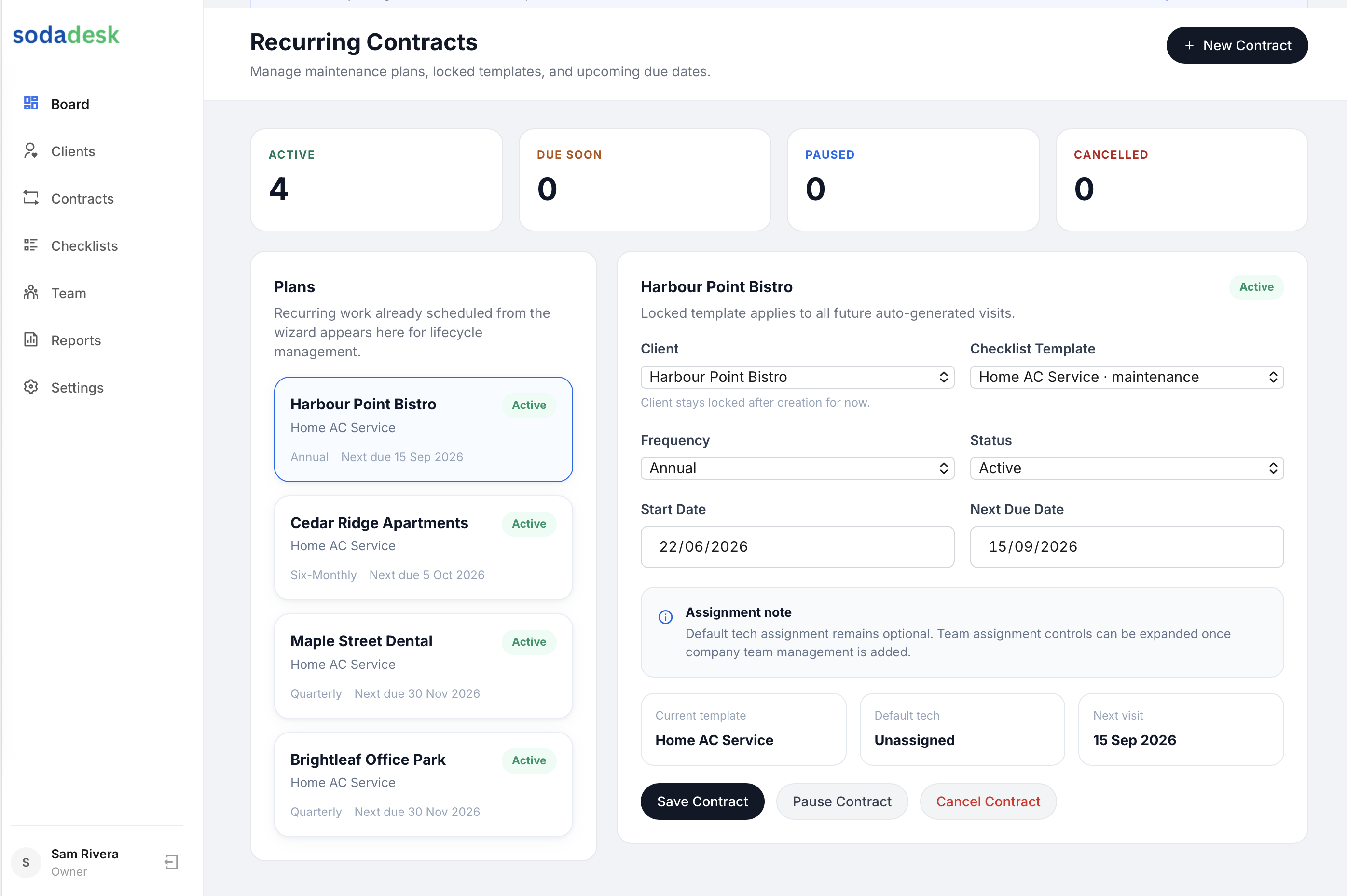
A recurring plumbing plan only works if the office can see the visit trail without digging through text messages. You want to know:
- which jobs are due this month
- which tech handled the last visit
- whether the visit was completed or missed
- what proof came back from the field
- whether a follow-up note was left for the next round
SodaDesk keeps the recurring service visit tied to the job record, so your office is not rebuilding the story from memory. If a customer calls and says, “Did anybody come by last Tuesday?” you’ve got the check-in time, the onsite duration, and the photos from that exact visit. That takes the heat out of the conversation fast.
And it matters when you’ve got five to 20 trucks. A solo operator can remember a lot. Once you’ve got a few technicians and a stack of maintenance contracts, memory stops being a system.
A simple example from the field
Picture a mixed-use building with a quarterly plumbing maintenance plan. On one visit, the tech checks the domestic water heater, tests the discharge line, inspects a sump pit in the basement, and looks over the restroom fixture shutoffs.
He checks in on site, starts the clock, and takes a before photo of the water heater drain area. He flushes out a little sediment, snaps an after photo, records that the relief valve operated normally, and notes a slight drip at one sink shutoff in the tenant area. He adds a photo of the drip and checks the box for follow-up needed on next service.
Now the next tech doesn’t have to guess. The office doesn’t have to ask around. And when the property manager wants to know what got done, you’ve got the visit record sitting there with the time on site, who was there, and the pictures to back it up.
That is what recurring plumbing service should look like. Clean, simple, and hard to argue with.
Keep the contract tied to actual site proof
A maintenance contract is only worth what you can show after the visit. A signed agreement sitting in a drawer does not tell you who checked the sump pump, whether the water heater got flushed, or how long the tech was actually on site. The site record does.
For plumbing shops, that means every recurring job should leave the same basic trail. Check in. Time on site. Photos. Checklist. Notes. Then the next visit builds on the last one instead of starting from scratch.
If you’ve ever had to defend a recurring service plan with nothing but a vague office note, you already know why that matters. The record should be there before the argument starts.
Common questions
What should I record on a recurring plumbing maintenance visit?
Record the check in time, time on site, who did the work, photos, and a short checklist of what was actually touched. For plumbing, that usually means water heater flush notes, shutoff valve checks, sump pump testing, drain condition, and any leaks or corrosion found.
Why do recurring plumbing jobs need photos?
Because a photo shows what the tech saw on site. A note that says a water heater was flushed is fine. A before and after photo, plus a photo of a leaking shutoff or rusted pan, gives you a real job record if the customer asks later.
How does time tracking matter on maintenance contracts?
It shows the technician was actually on site and how long they stayed. For recurring service, that matters just as much as the checklist. It separates a real visit from a quick drive-by note.
What if the same issue keeps showing up on recurring visits?
Keep the history tied to the job record. If the sump pump, relief valve, or supply line keeps acting up, you’ll see the pattern across visits. That makes it easier to talk to the customer with facts instead of memory.
Can recurring service records help my office stay organized?
Yes. The office can see which visits are due, which were completed, and what proof came back from the field. That keeps maintenance plans from turning into a pile of missed notes and half-finished text messages.