The real problem with recurring plumbing visits
Recurring plumbing work sounds simple on paper. Clean the strainers. Check the water heater. Inspect the backflow assembly. Flush the recirc line. Swap a filter if the contract calls for it. Then move on to the next property.
But the trouble starts after the truck pulls away. A month later the customer asks if the sediment filter got changed. Or they say the shutoff at the mezzanine sink was already bad before your guy touched it. Or they want proof that someone actually showed up at the condo building on the third Tuesday like the agreement said.
That’s where a lot of maintenance contracts get mushy. The work happened, but the record didn’t. And once the record is thin, your office spends time digging through texts, asking the tech what he remembers, and trying to piece together a story from memory. That’s a bad use of everybody’s day.
Recurring service visits need a paper trail that lives with the visit itself. Time on site. Who checked in. What they saw. What they cleaned, tested, or replaced. Photos before and after. That’s the part the customer remembers later.
What a solid service agreement visit should record
A plumbing maintenance visit is not a vague “stopped by and looked around” thing. It should read like somebody actually worked the property.
For a water heater maintenance call, the record should show:
- Tech name
- GPS check in time at the property
- Time on site
- Tank or tankless unit location
- Gas or electric type
- Temperature reading if the job calls for it
- Sediment drain condition
- TPR valve check
- Flue or vent photo if it’s a vented unit
- Photos of any leaks, corrosion, or scale
- Checklist items completed
For a recirculation system, you want different details.
- Pump running or not
- Return line temperature
- Isolation valve condition
- Visible leak at the pump or flanges
- Timer setting if that’s part of the contract
- Photo of the pump tag or affected area
For a backflow or preventive plumbing visit, the checklist might include:
- Access clear or blocked
- Visual condition of the assembly
- Cover reinstalled
- Signs of leakage
- Photo before and after service
- Notes on any damaged insulation or frozen piping risk
None of that sounds fancy. Good. It shouldn’t. It should sound like work got done.
Why memory and paper fail on recurring contracts
I’ve seen this more than once. A tech finishes a monthly property visit, fills out half a clipboard in the truck, and hands it in at the end of the week. Then the paper sits under a coffee cup, or the handwriting is garbage, or one line says “all good” and that’s it.
That might feel fine until the customer calls and says the lobby sink still drains slow or the boiler room has a puddle by the expansion tank. Now you’ve got no clean record of what happened at the last visit.
And with recurring plumbing contracts, the gap hurts more because you’re not just proving one job. You’re proving a pattern. The customer expects the same checklist every month or quarter. If one tech checks the water heater an hour after check in and another tech is in and out in twelve minutes, the contract starts to look sloppy.
That’s why time on site matters. Not because you’re trying to nickel and dime anybody. Because a real maintenance visit takes a real amount of time. If a guy is supposed to inspect a basement booster pump, check a trap primer, and photo a leaking angle stop, the clock should show a visit long enough to cover the work.
How to keep recurring visits tied to the right tech
One of the easiest ways to lose control is to let recurring visits become generic calendar entries. “Monthly service.” “Quarterly check.” That tells you almost nothing.
A better setup ties each visit to the property and the scope. The tech checks in on site. SodaDesk stamps the time and GPS location. The visit opens with the right checklist already attached. The tech finishes it on the phone before he leaves the property.
That gives you a few things you can point to later.
First, you know who was there. That matters when you run a five-truck shop and two guys are in the same area on the same morning.
Second, you know the work matched the contract. If the agreement says inspect the water heater, test the recirc pump, and photograph any active leaks, you can see whether those boxes were actually checked.
Third, you know the visit happened at the property and not from the front seat of the truck down the block.
That last one is worth saying plain. Shops lose money when recurring work gets padded, shortened, or half-done. Not always on purpose. Sometimes a guy is slammed and tries to make his day go faster. But the customer still expects the same service.
A simple example from a condo maintenance route
Say you have a recurring plumbing contract for a small condo complex. Each month the tech checks the domestic water heater room, the recirc pump, and a few common-area fixtures.
On a good visit, the tech checks in at the property gate, walks to the mechanical room, and starts the checklist. He takes a photo of the water heater area before touching anything. He notes 124 degrees on the hot water outlet, sees some light mineral buildup on the drain valve, and records that the TPR discharge pipe is clear.
Then he checks the recirc pump. The pump is running, but there’s a damp spot under one union. He snaps a photo. He writes that the union is weeping slightly and the insulation around the pipe is wet. He finishes the rest of the checklist, takes an after photo, and signs off.
Now fast forward two weeks. The property manager asks if anyone looked at that leak. You don’t need to ask the tech to remember what he saw. You open the visit record. There’s the photo. There’s the note. There’s the time on site. There’s the name on the check in.
That is a business record the customer can understand. It doesn’t need a long speech from the office.
What to standardize across every recurring plumbing visit
If you want recurring plumbing contracts to run cleaner, keep the visit format tight.
Use the same checklist fields for the same kind of property work. A boiler room visit should always ask for the same core items. A water heater check should always capture the same photos. A monthly drain maintenance visit should always note the line, the fixture, and any visible buildup or backup.
Don’t make techs guess what matters.
A decent recurring visit record usually includes:
- Property name
- Site contact if there is one
- Check in time
- Check out time
- Time on site
- Technician name
- Checklist status
- Photos before and after
- Notes on parts touched or adjusted
- Customer signature if the contract calls for signoff
If a visit includes a part replacement, capture the part name and location. A hose bib washer. A fill valve. A sump pump float switch. A backflow cover. A condensate trap. Not every maintenance stop needs parts, but when it does, the record should show exactly what changed.
That’s how you keep the contract from turning vague after six months.
Why photos matter more than most owners think
A photo is worth more than a long note full of “looks good.” Especially in plumbing.
Photos show the rust line at the water heater base. The green crust at a fitting. The wet insulation under a pump. The shutoff that’s buried behind stored boxes. The clean trap after service. The cracked lid on a sump basin.
And photos aren’t only for bad news. They also prove the work got finished. Cleaned strainers. Reinstalled access panels. Opened and closed valves. Reset equipment. Labeled a line. Put the area back the way it should be.
A good after photo can save you from a stupid argument later. If the customer says your tech left the room messy or didn’t replace the cover, the photo tells the story.
The office side matters too
Recurring plumbing service only works if the office can see what happened without chasing people.
When the visit closes, the record should already show the check in time, time on site, checklist results, and photos. That means your office can answer a customer call without texting three different techs and waiting until night.
It also means you can spot weak habits.
If one tech never takes after photos, you know it.
If another guy’s monthly visits always show ten minutes on site for a job that should take thirty, you know that too.
If a contract keeps producing the same note about a slow drain or a sweating pipe, you can see the pattern and address it with the customer before it becomes a bigger problem.
That’s the part a lot of owners want. Not extra software noise. Just a clean record that tells them the job got done right without driving to every site themselves.
What this looks like inside SodaDesk
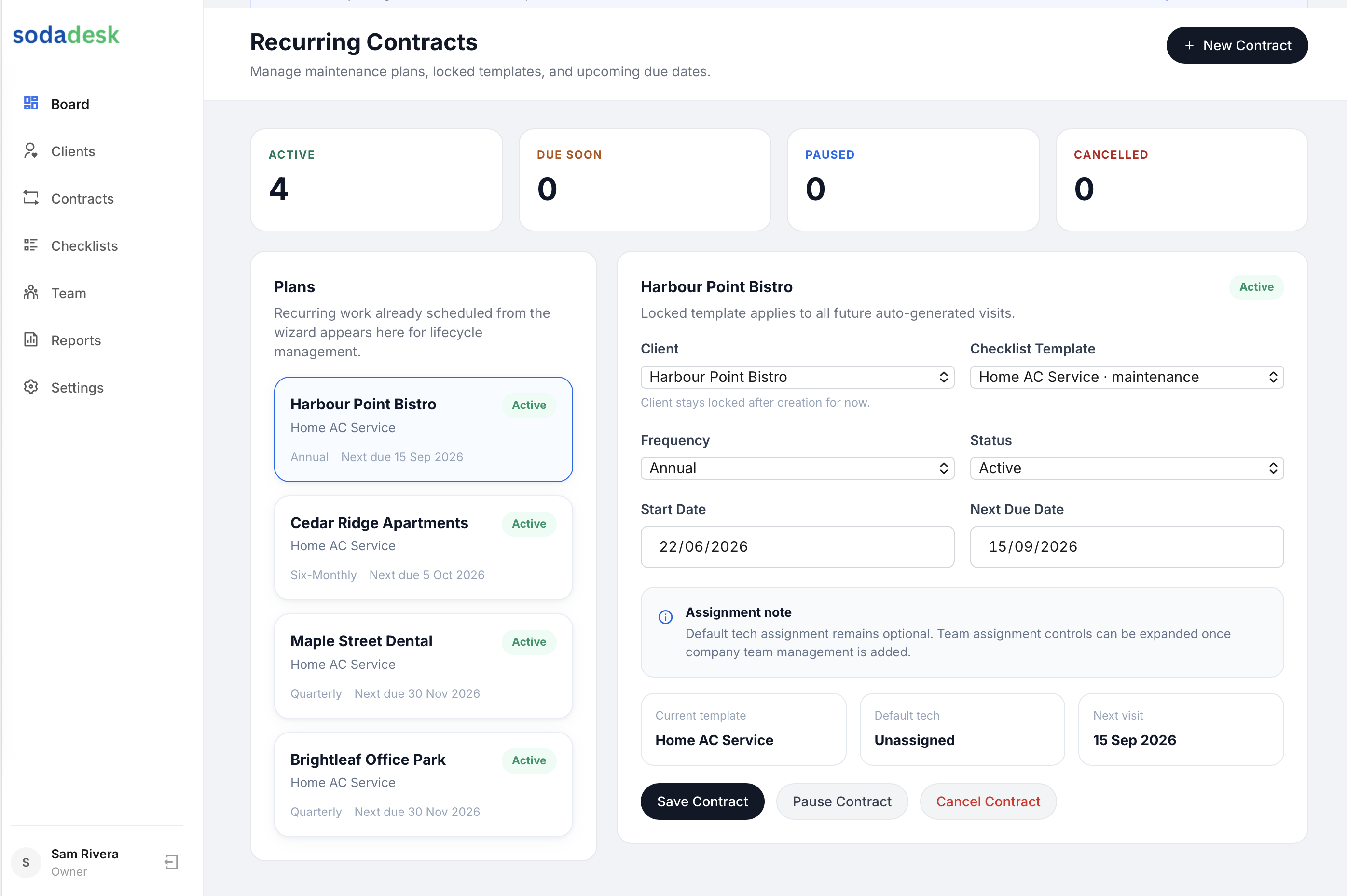
SodaDesk keeps the recurring service visit tied to the job record. The tech checks in with GPS. The time starts. He opens the checklist for that property and that service agreement. He adds photos, notes, and any customer signoff before he leaves.
For a plumbing shop, that means each monthly or quarterly visit carries its own proof. You can see who did the work, when they were on site, and what they found. If the next visit comes around and the same leak is still there, you’ve got the old record sitting right next to the new one.
That matters when you’re managing maintenance contracts across apartments, restaurants, offices, or small commercial properties. These jobs repeat. The proof should too.
Common questions
What should a recurring plumbing service visit record include?
At minimum, I’d want the tech name, GPS check in, time on site, checklist items completed, photos, and notes on anything cleaned, tested, adjusted, or replaced.
How do you prove a tech actually showed up for a maintenance contract?
Use GPS check in, time stamps, and a visit record tied to the property. Add photos from the job so the file shows real work happened on site.
What kinds of plumbing jobs need recurring visit records?
Water heater checks, recirc pump inspections, backflow visual checks, sump pump visits, drain maintenance, and common-area fixture service all benefit from a repeatable record.
Why aren’t paper service tickets enough anymore?
Because they get lost, they’re hard to read, and they rarely show enough detail when a customer questions the work weeks later.
What photos should techs take on recurring plumbing visits?
Take a before photo, an after photo, and close-ups of anything abnormal. Think leaks, corrosion, wet insulation, worn parts, open panels, or a replaced component.