Why ductwork records matter on a real job
Ductwork is where small misses turn into big headaches. A loose takeoff, a crushed flex run, a gap around a return box, any of that can leave you with weak airflow, dust complaints, and a callback you never wanted. And if you’re running 5 to 20 trucks, you can’t keep all of that in your head.
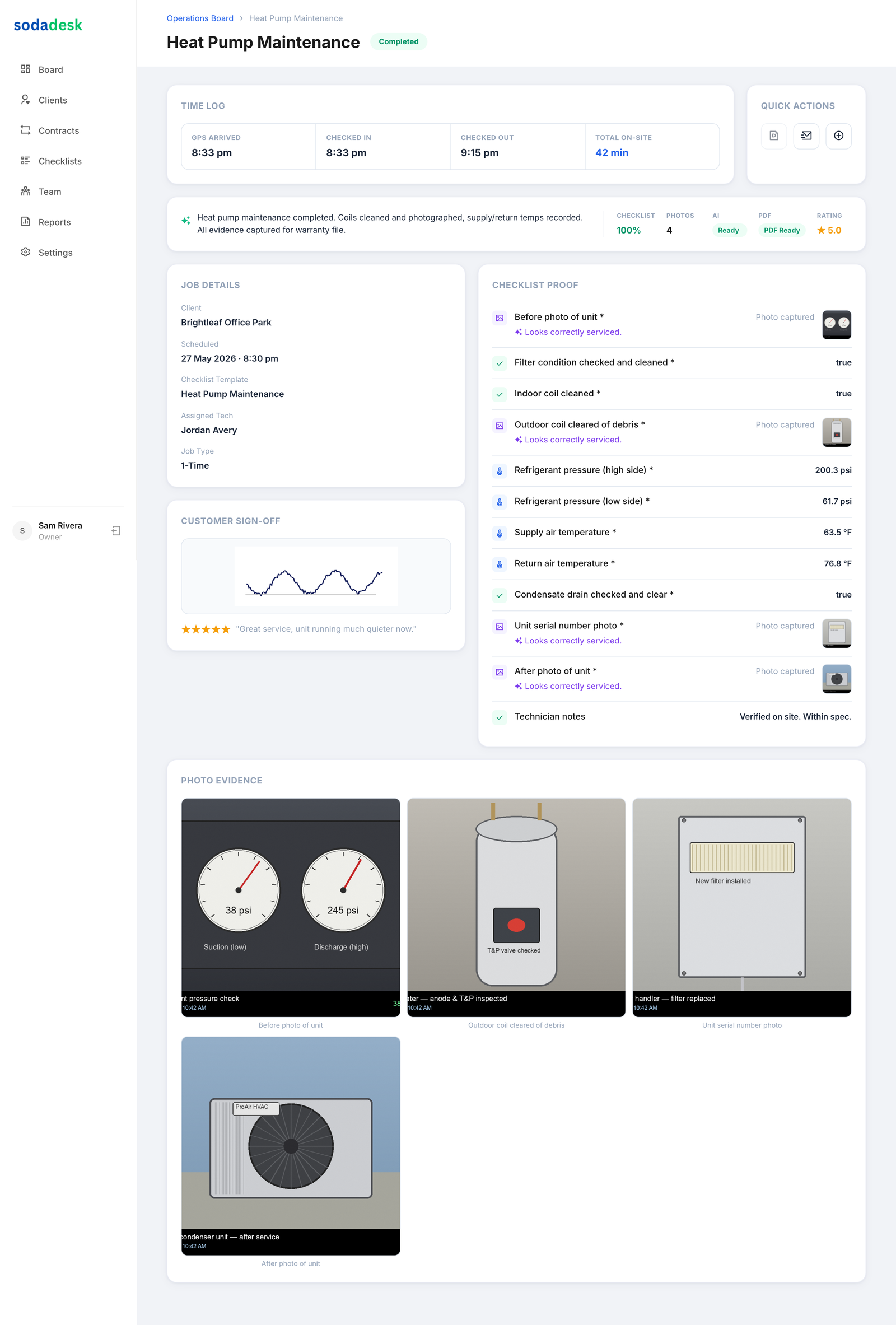
You need a record that says who went there, when they got there, what they touched, and what it looked like when they left. Not a fancy report. Just proof. Time on site. Photos. A checklist that matches the actual work.
Say a tech spends the morning fixing a sagging flex line in an attic, replacing a torn mastic joint, and sealing a return plenum. If all you have is, “duct repair completed,” you’re guessing later. If you have check in time, before and after photos, and a completed checklist, you know what happened without playing detective on a Friday afternoon.
Start with the arrival record
The first part of a ductwork job record is the arrival. Who was there. When did they check in. Which site. That matters more than guys think.
If a tech says he got to the house at 8:00 and left at 9:15, but the GPS check in shows 8:24, you’ve got something real to talk about. Maybe he grabbed parts first. Maybe he sat in the truck. Maybe traffic was ugly. Fine. But now you know.
For ductwork, I want the check in tied to the actual job, not just a name in a notebook. That record should show:
- technician name
- check in time
- check out time
- job site address
- optional GPS check in stamp
That’s the backbone. Without it, the rest of the notes don’t mean much.
What the tech should inspect before touching anything
A proper ductwork walkthrough starts before the first screw comes out. The tech should look at the system as a whole. Old mastic. Torn insulation. Flex that’s stretched too tight. Duct board with a bad corner. Loose hangers. Kinked takeoffs. Leaky seams at the plenum. Those are the usual suspects.
The checklist should make him write down what he actually found, not just tick a box that says “ductwork inspected.” Good job records show the parts and conditions that matter:
- supply trunk condition
- return trunk condition
- flex duct condition
- insulation damage
- disconnected or loose joints
- hanger support spacing
- visible air leaks
- register and boot fit
If your tech is using a manometer or static pressure gauge on a duct repair visit, record the readings too. Maybe supply static is 0.42 in. wc and return is 0.18 in. wc. Maybe the numbers aren’t crazy, but they tell you whether the system was starved before the repair and what it looked like after. That’s useful later when somebody asks why the back bedroom still feels weak.
Take the right photos, not random ones
Photos are where a lot of shops get lazy. Guys snap a blurry shot of a ceiling tile and call it proof. That’s not enough.
For ductwork, you want before and after photos that show the actual work area. If you repaired a return box in a closet, get a wide shot and a close shot. If you resealed a trunk seam in the attic, get the seam, the mastic, and the surrounding insulation. If you replaced a boot, show the old damage and the finished fit.
I’d expect at least these photo points on a duct job:
- damaged section before repair
- material or part installed
- finished seal or connection
- any hidden area that was hard to reach
- final condition after cleanup
And don’t forget the ugly spots. The inside of a hot attic in July is exactly where proof matters most. If a tech had to crawl over joists to reach a trunk line, that’s the kind of place customers forget about and owners need to remember.
Build the checklist around real duct tasks
A ductwork checklist should match the work your techs actually do. Not some generic service form that could apply to anything with wires and screws.
For a typical duct repair or duct sealing visit, the checklist should cover tasks like these:
- inspected supply and return duct runs
- sealed leaking seams with mastic or approved tape
- repaired or replaced damaged flex section
- secured loose hangers or supports
- reconnected separated duct joint
- checked boot and register fit
- verified insulation coverage
- cleaned work area
If the job involved sheet metal repair, include that too. A crushed elbow, a rusted plenum corner, or a bad collar on the trunk should be recorded. If a tech used foil tape, mastic, zip screws, draw bands, or a new start collar, note the parts. Those details matter when you’re reviewing the job later or dealing with a repeat complaint.
This is where owner accountability gets real. A tech can’t say, “I think I sealed it,” if the checklist says exactly what he did and the photo shows the finished seam.
A simple example from a real kind of day
Picture a Saturday morning call at a ranch house. The upstairs room is hot. The tech finds a split in the flex where it rubs against a truss. He also finds the supply plenum leaking at a corner and the return box drawing attic dust because the gasket is shot.
A clean job record would show:
- check in at 9:06 a.m.
- tech name
- inspection notes on flex split, plenum seam, return leakage
- before photos of the torn flex and dusty return box
- materials used: flex connector, mastic, foil tape, replacement gasket
- checklist items marked complete for repair, sealing, support, cleanup
- after photos of the sealed plenum and reattached flex
- check out at 10:22 a.m.
If that same house calls back three days later, you’re not relying on memory. You know exactly what was fixed and who fixed it. That saves a lot of finger pointing.
Use the record to catch repeat duct problems
Recurring visits matter in ductwork because some problems come back if you don’t fix the root cause. A flex line may keep tearing because it’s hung wrong. A trunk seam may keep leaking because the support is sagging. A return may keep picking up attic air because the gasket keeps failing.
If you’re sending a truck back to the same site on a regular basis, keep the visit history attached to that location. Then your tech can see the last repair, the last photos, and the last checklist before he even gets there. That beats starting from scratch every time.
The useful part is simple. You stop wasting time relearning the same house. You see patterns. Maybe one branch run keeps pinching behind a joist. Maybe the same attic zone keeps eating flex because of bad routing. That’s the kind of thing a clean record exposes.
What the owner should be able to answer after the job
If the duct job record is worth keeping, you should be able to answer a few plain questions without calling anybody.
Who did the work? What time were they on site? What did they find? What parts or materials were used? What did it look like when they left?
That’s the point. Not paperwork for paperwork’s sake. Just enough proof that the job got done the way the truck note said it did.
When SodaDesk stamps the check in and check out times, ties them to the technician, and stores the photos and checklist together, you’ve got a record you can trust later. You don’t have to wonder if the repair happened or if somebody only meant to do it. For ductwork, that matters every bit as much as the wrench in the hand.
The parts and readings worth recording every time
A good ductwork record gets better when you keep the same basics every visit. I’d want these written down often enough that your crew gets used to it:
- flex duct size and section replaced
- duct board or sheet metal repair location
- mastic or tape used
- hanger or strap repair
- boot, collar, or plenum work
- static pressure readings before and after if taken
- visible leak points found
- attic, crawlspace, or closet work area notes
That’s the kind of detail that makes a record useful when the same system shows back up a month later. Not pretty. Useful. And that’s what you want from a ductwork job record.
Common questions
What should a ductwork job record include?
It should show who was on site, when they checked in and out, what duct sections or fittings they worked on, before and after photos, and a completed checklist. If your tech took static pressure readings, record those too.
Why do photos matter on duct repair jobs?
Because ductwork is easy to say you fixed and hard to prove later. Photos show the torn flex, the loose seam, the sealed plenum, and the finished repair. That cuts down on arguments when a customer calls back.
Should I record materials on ductwork visits?
Yes. Note things like flex duct, mastic, foil tape, zip screws, collars, gaskets, and hangers. Those details tell you what was actually done and help the next tech understand the repair.
How does recurring visit history help with ductwork?
It shows the last repair, who did it, and what the duct looked like before. That makes it easier to spot repeat failures like sagging flex, a leaking trunk seam, or a bad return connection.