The real problem starts after the truck leaves
Most electrical trouble in a shop isn’t a mystery in the field. It shows up later, when somebody asks what happened on Tuesday at the strip mall job or the house panel call. The tech says they were there for two hours. The helper says he thought they were done after the breaker swap. The customer says nobody showed up until noon. And you’re stuck sorting out a story from memory.
That is where time tracking matters. Not the fluffy kind. I mean actual check in time, actual check out time, and a record of who was on site. If a tech opened a panel, tested a feeder, changed a GFCI, or replaced a contactor on a condenser disconnect, you want that tied to the job record right away.
Paper timesheets are a tax on your Friday afternoon. So are text threads and “I’ll fill it in when I get back.”
What electrical accountability should record
If you’re running electrical service calls, the job record should answer a few plain questions.
Who showed up. One tech or two. Lead or helper. If a subcontractor stepped in, that should be in the record too.
When they got there and when they left. GPS check in is useful because it shows the truck arrived at the site, not just that somebody claimed the clock started.
How long they were on site. Not rounded up because the tech forgot to hit stop. Real time. That matters when you’re comparing labor to what actually got done.
What they did. A short checklist beats a vague note. Panel inspection, breaker replacement, receptacle swap, wire termination checked, voltage confirmed, equipment run tested. Plain language. No nonsense.
What got photographed. Before and after photos of the open panel, the damaged receptacle, the replaced breaker, the finished cover plate, the labeled disconnect. Those pictures are the business record. They show the work was actually done.
And if the customer signs at the end, that closes the loop. Not as a legal shield. Just a clean acknowledgment that somebody stood there, saw the work, and accepted the visit.
A service call example from the electrical side
Say your tech gets a call for a breaker that keeps tripping in a small warehouse. He checks in at 1:12 p.m. with GPS on. That gives you the arrival record.
He opens the panel and finds a 20 amp breaker feeding a badly loaded circuit with heat on one termination. He notes the panel condition in the checklist. He snaps a photo of the breaker, the bus, and the charred insulation around the conductor. He replaces the breaker, re-terminates the conductor, and runs a meter check. Maybe he records 121.4 volts line to neutral and confirms the load is steady under test.
Before he leaves, he takes an after photo with the panel cover back on. He checks off that the label was updated. Then he checks out at 2:03 p.m.
Now you’ve got more than a memory. You’ve got time on site, who did the work, what part was touched, and proof in photos. If the customer calls three days later and says the problem never got fixed, you’re not guessing. You can look at the record and see exactly what was done.
That matters even more when two people touch the same job. One tech opens the panel. Another comes back later to finish the meter base repair or swap the light fixtures in the tenant space. If your record is sloppy, the whole visit gets muddy. And mud turns into callbacks you can’t explain.
Why time alone is not enough
A lot of owners think they just need better electrician time tracking software or an electrician timesheet app. Sure, time matters. But time by itself doesn’t tell you if the work got finished.
A tech can clock four hours and still leave loose ends. A helper can ride along and get paid for labor that never got tied to a job. And a customer can claim nobody came out at all if you don’t have anything but a handwritten note.
That’s why job proof matters alongside time tracking. If the record says the tech was on site for 1 hour and 51 minutes, but there’s no photo, no checklist, and no check in, you still have a weak file. It’s easy for everybody to argue with a weak file.
With a proper field record, you know who was there and when. You also know what they saw, what parts they used, and what condition they left behind.
What to ask your techs to capture every time
Don’t make this complicated. Techs will ignore it if you do.
Have them record the actual check in and check out. Let the app stamp the time and location.
Have them complete a short checklist tied to the type of electrical visit. Panel service, outlet repair, light fixture work, disconnect inspection, or equipment troubleshooting.
Have them take a few photos that match the work. One before. One during if the issue is inside a panel or fixture. One after. If they replaced a breaker, the after photo should show the finished installation. If they changed a receptacle, show the new device and cover plate.
Have them note parts used. Breaker amperage. Receptacle type. Wire connector size. Meter socket cover. GFCI device. You don’t need a novel. You need enough detail that a shop manager can read it later and know what happened.
If it was a recurring service visit, make sure the visit itself is tied to the same customer site record. That way you can see the pattern. Same tenant. Same panel. Same nuisance trip every month. That kind of trail is gold when you’re trying to see which jobs keep coming back.
The part owners usually miss
A lot of callbacks start with a small accountability gap, not a big mistake. The tech forgot to record the second trip to the rooftop disconnect. The helper clocked in from the parking lot but never checked in at the actual site. The after photo never got taken because the panel was hot and everybody got busy. One missing piece turns into a messy conversation later.
That’s why a time tracking app for field service techs is only useful if it actually captures what happened on site. For electrical work, the record has to match the real sequence. Arrive. Diagnose. Repair. Test. Photograph. Sign off.
If you’re looking at electrical contractor labor tracking, that sequence is the point. You’re not just counting labor hours. You’re tying labor to proof.
And yes, that makes payroll cleaner too. But I’m not talking about payroll here. I’m talking about not having to wonder if a four hour service call was really a four hour service call, or if the crew spent half of it hunting a missing breaker in the van.
What this does for your shop without making a big song and dance about it
It gives you a record you can trust when a customer calls back.
It lets you see which techs finish clean and which ones need reminders.
It makes it easier to spot the jobs where time and output don’t match up.
And it gives you a simple answer when someone asks, “Who was there, and what did they actually do?”
That answer should not depend on memory, voicemail, or a coffee-stained notebook on the dash.
How SodaDesk fits a service electrician’s day
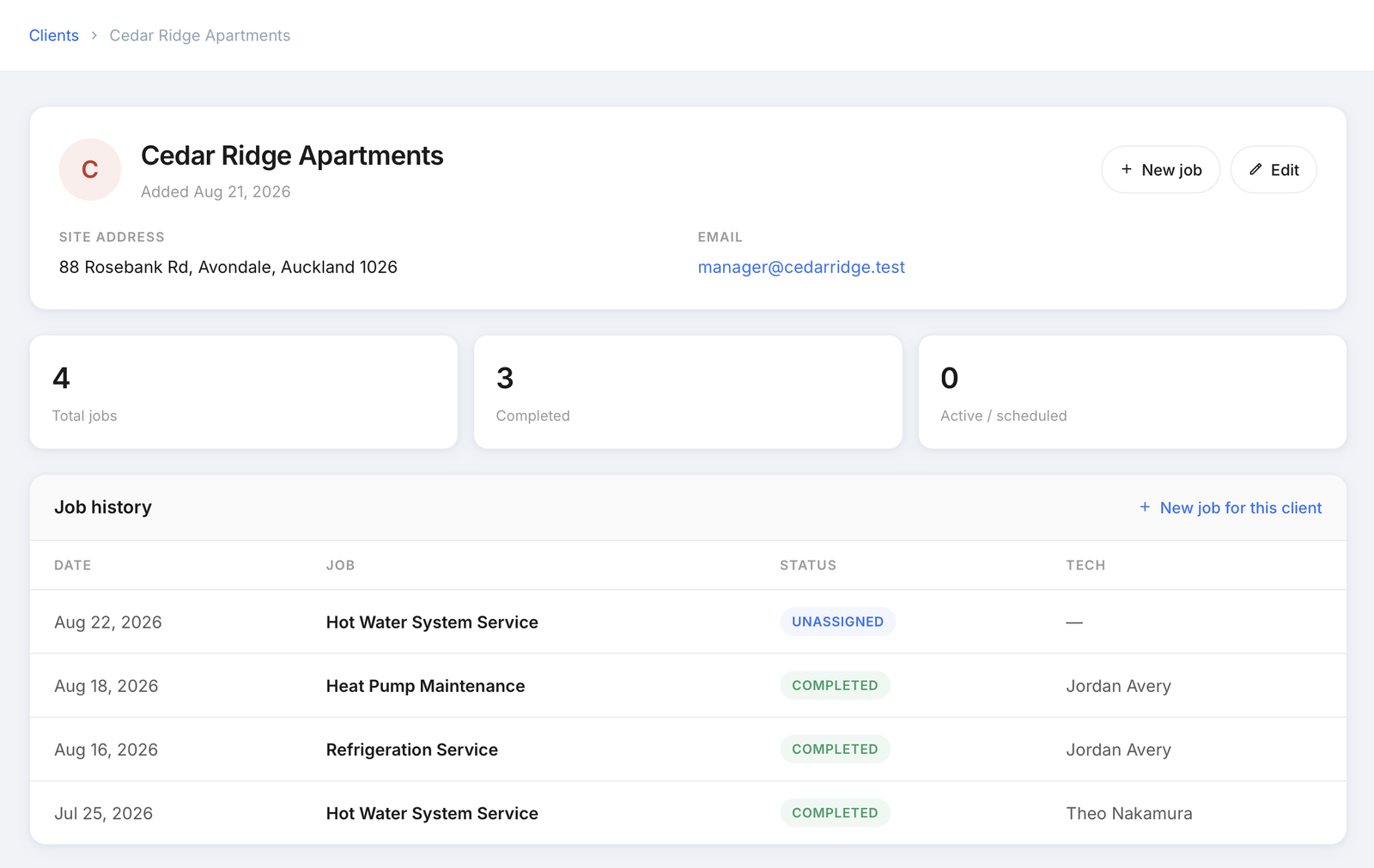
SodaDesk stamps the check in time and location. It records check out time too. You can attach photos, complete a checklist, and capture a customer signature at the end of the visit. That gives you a clean job record for each service call.
For an electrical shop, that means you can document panel work, fixture repairs, outlet swaps, device testing, and follow-up visits without trying to reconstruct the day later. If a tech returned to swap a breaker, fix a tripped GFCI, or finish a lighting issue, the record shows both visits. If a helper worked the job, the record shows that too.
That’s the kind of detail an owner needs when the phone rings after hours and the customer says the problem is still there. You don’t need a lecture. You need the facts.
A simple rule for your techs
If the truck pulled away and there’s no check out, no photo, and no checklist, the job isn’t really done in your records.
That’s the rule. Keep it that simple and the rest of the shop gets easier to run.
Common questions
What should an electrician track on a service call?
Track who checked in, when they arrived, when they left, what they worked on, parts used, photos of the issue and finished work, and any customer sign-off.
Why isn’t a time entry enough for electrical jobs?
Because hours alone don’t show what got done. A time entry without photos, a checklist, and a site check in still leaves you guessing if the work was finished.
How does GPS check in matter for field time tracking?
It ties the clocked time to the site. That gives you a cleaner record than a manual timesheet filled out later from memory.
What kind of proof should I keep on panel or breaker work?
Keep before and after photos, the breaker size or part used, a short checklist note, and the time on site. That gives you a solid record if the customer calls back.
Can this work for recurring electrical visits?
Yes. Recurring visits tied to the same site make it easier to see patterns, compare time on site, and track whether the same issue keeps coming back.