The problem with backflow jobs is the paper trail, not the device
Backflow preventers are not the hard part. The hard part is proving the work got done right when nobody from your shop is standing there anymore. You might send a tech to test a double check, repair a reduced pressure zone assembly, or replace a worn shutoff. The job looks simple on the truck. Then the customer calls three days later and says they never saw anyone. Or the tech remembers the assembly was leaking at the relief valve, but the note says only "tested OK."
That is where you get burned. Not because the work wasn't done. Because the record is thin.
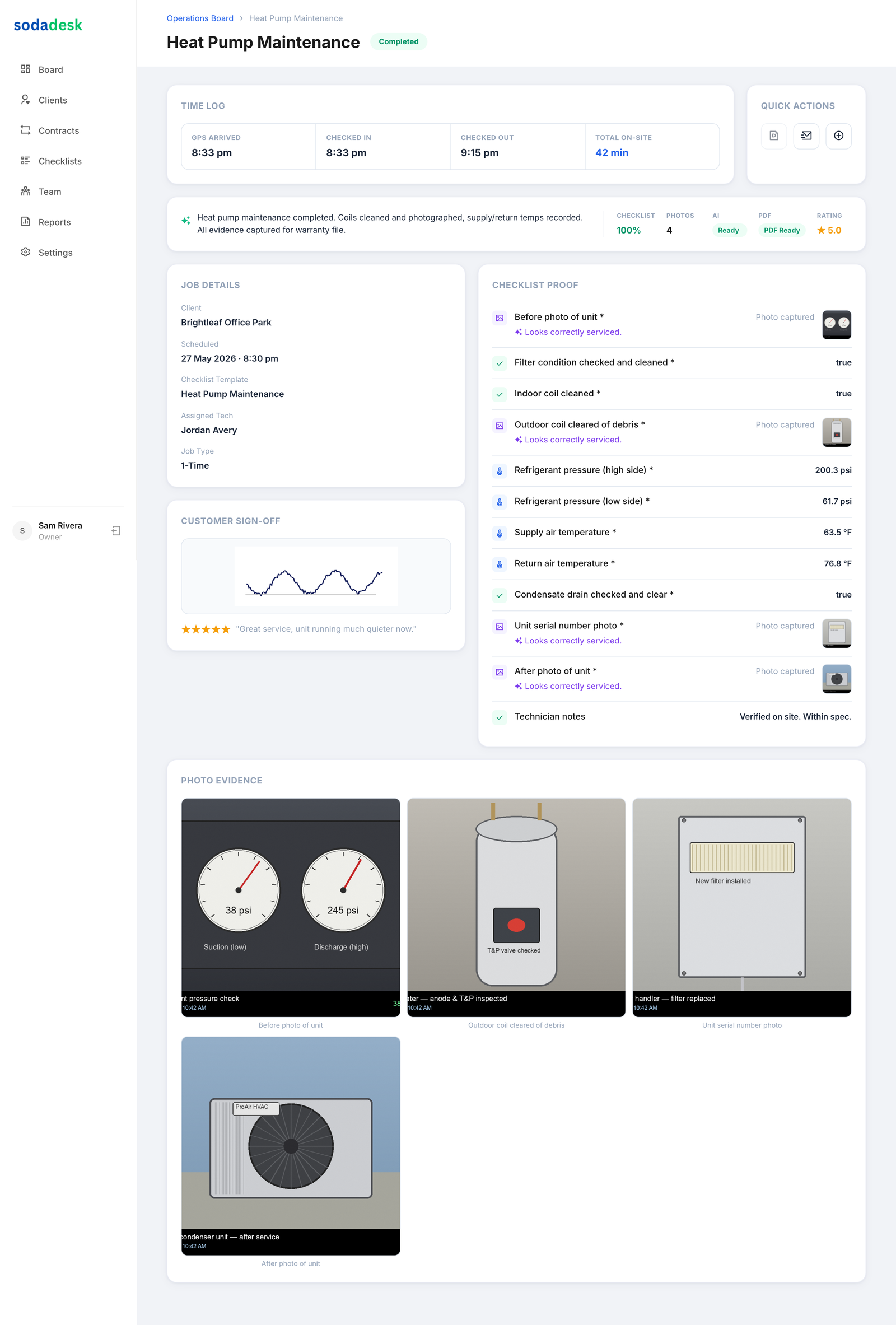
A good backflow record gives you the basics without making your office chase everybody down later. You want to know who was on site, when they checked in, how long they stayed, what device they worked on, what readings they took, what parts they swapped, and what the final condition was. If the tech replaced a bonnet O ring, cleaned a strainer, or found a test cock cap cracked, that belongs in the record. So does the customer signature and the photos.
What a real backflow job record should show
Start with the technician. Name. Not a nickname. If two trucks are in the same neighborhood that day, you need to know which set of hands touched the assembly. SodaDesk stamps the check in time and ties it to the tech, so you are not guessing later.
Then capture the site proof. A photo of the meter setting, the assembly, or the exterior riser tells you the tech was there. If the backflow preventer sits in a mechanical room behind a locked door, the first photo should show the unit in place before the work starts. If it's in a pit, snap the access point and the assembly condition before anybody starts pulling parts.
The checklist matters too. Keep it plain. Did the tech isolate the assembly? Did they relieve pressure? Did they inspect the shutoff handles? Did they test each check or zone? Did they verify the relief valve closed and open at the right points? Did they bleed the lines after reassembly? Did they reset the device and leave it leak free? These are the things that separate a clean service call from a vague note.
And yes, record the actual readings. Not "passed." Write down the test results. If the differential across the first check was 1.2 psi, write it down. If the relief valve opened at 2.0 psi, write it down. If the second check held and closed tight, note it. If the device needed a new spring, test cock, rubber kit, or bonnet, list the part.
A backflow job without readings is a memory test. Memory gets fuzzy.
The kind of problems that show up when the record is weak
Picture a tech sent to a medical office with a reduced pressure zone assembly on the domestic water line. The device tests dirty. The relief valve spits for a second. The tech rebuilds the unit with a seal kit, cleans the strainers, and gets it to hold. Good work.
Now picture the office manager calling later and asking what happened. If all you have is a one line note, the story sounds shaky. If you have photos of the device before and after, the checklist showing the checks performed, the actual test readings, and the parts used, the discussion is easy. You are not arguing from memory. You are showing the job record.
Same thing on a fire line test. A tech might find a stuck shutoff, a capped test cock that's split, or a gauge that won't settle. Maybe the assembly needs a rebuild. Maybe the problem is dirt in the check module. If that work is not documented, the next person at the property has no clue what was already handled.
And if you run recurring backflow visits for apartment buildings, schools, or strip centers, weak records pile up fast. One unit on a site gets missed. Another gets tested twice because nobody could see the last visit clearly. That is a mess you don't need.
How SodaDesk fits a backflow visit without adding fluff
This is where a real job record pays for itself. SodaDesk tracks time on site, who did the work, and the proof behind the visit. It is not a quote pad or a dispatch board. It is the record of what happened after the truck rolled.
A tech checks in at the site. That gives you the time on site. They run the checklist on the backflow preventer. They upload before and after photos. They note the readings from the test kit. If they change out a diaphragm, seat kit, o ring, spring, or test cock, that part goes in the job record. If the assembly is in a tight spot behind a water heater, that photo shows the actual working conditions too.
If the job is recurring, the next visit starts with the last visit in view. That matters more than people think. A shop owner can spot a pattern. Maybe the same device keeps losing pressure at the relief valve. Maybe the second check is getting flaky every spring. Maybe the same building always has a locked room issue, so the tech needs to plan access ahead of time. A clear recurring visit record shows those patterns without digging through old notes.
A simple example from the field
Say your tech gets called to a restaurant with a double check assembly feeding the domestic water. The manager says the outside faucet is dripping and wants it fixed. The tech tests the assembly first. Good habit. The first check is sluggish. The second check is fine. They find debris in the body, clean the screen, replace a worn check spring, and retest.
What belongs in the record?
- Check in time and check out time.
- Technician name.
- Device type and location.
- Photo of the assembly before work.
- Photo after reassembly.
- Test readings for both checks.
- Parts used, like spring, seal, or O ring.
- Notes on any leaks, stuck handles, or damaged test cocks.
- Customer signature.
That is a real job record. If the restaurant manager calls next week and says they never knew the device was serviced, you have the record. If the next annual visit comes around, the tech can see what was changed this time and inspect the same weak points instead of starting blind.
Why shop owners should care even when the work was fine
Most owners I know are not worried about the one easy backflow job. They are worried about the jobs that turn into callbacks, disputes, or wasted repeat visits. A clean record cuts down on all three.
If a tech says they tested a reduced pressure zone assembly and found it leaking, but there is no photo, no reading, and no note on what was replaced, you are left sorting it out by phone. If the tech spent 40 minutes on site and the record shows 12, you know something is off. If the signature is missing, you know the visit never really closed out.
That is the part people miss. Time tracking and job proof are not paperwork for the sake of paperwork. They tell you if the truck actually stopped, if the tech stayed long enough to do the test, and if the final result makes sense. On backflow work, that matters because the assembly itself often looks fine from the outside. The proof is in the test, the parts, and the photos.
What to ask your tech to record every time
Keep it dead simple and make it part of the visit every time.
Ask for the exact device location. Ask for the device type. Ask for the test readings. Ask for photos before and after. Ask for the parts used. Ask for the customer signature. Ask for notes if the assembly was hard to access, leaking, or already damaged when found.
If the job is recurring, keep the last service record attached to the next one. That way the tech knows if the same relief valve was sticky last time or if the same shutoff is already tired. That kind of continuity saves you from sending a truck back just to relearn what the first guy already found.
Backflow work is one of those plumbing tasks where the finished job can look boring. Good. Boring is fine. But the record should not be boring. It should tell the whole story without anybody having to call three people to piece it together.
Common questions
What should a backflow preventer service record include?
At minimum, include the technician name, check in and check out times, device location, device type, test readings, photos before and after, parts used, notes on leaks or damage, and the customer signature.
Why do photos matter on backflow jobs?
Photos show the actual device, the condition before work, the finished assembly, and the site where the tech worked. They settle questions later if someone says the unit was never serviced or the device was left in bad shape.
What readings should a tech record on a backflow test?
Record the actual test numbers for each check or zone, the relief valve behavior on an RP assembly, and any odd findings like a slow check, leaking shutoff, or test cock issue. "Passed" by itself is too thin.
How does recurring visit history help with backflow preventers?
It shows patterns. If the same assembly keeps leaking, sticking, or needing the same parts, the next tech can walk in with the past record and avoid starting from zero.
Why track time on site for a backflow service call?
Time on site ties the visit to real work. If a tech was only there a short time but the checklist shows a full test and repair, that mismatch stands out fast.